
Sony Bravia 2 II vs Bravia 3: Complete Comparison Guide
Picking a new TV can feel tricky. Sony makes this choice easier with two solid options: the BRAVIA 2 II and the BRAVIA 3.
Both TVs share Google TV, similar speaker systems, and Sony’s trusted 4K Processor X1. But each model has its own personality when it comes to picture quality.
The BRAVIA 2 II shines with wide viewing angles and smooth upscaling. It works great for group viewing and casual content.
The BRAVIA 3 brings extra brightness to the table. It handles low-resolution content well and offers solid build quality throughout.
Neither TV nails perfect black levels or premium HDR performance. Both are entry-level choices with their own trade-offs.
This guide breaks down the specs, strengths, and weaknesses of each model. By the end, you will know exactly which Sony BRAVIA fits your viewing needs best.
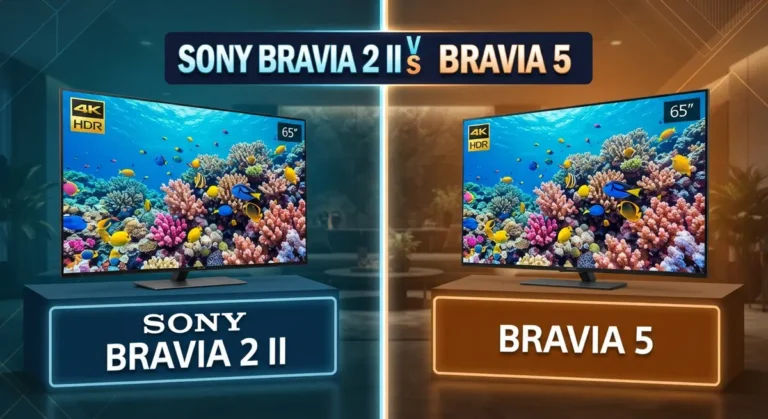
Quick Comparison: SONY Bravia 2 Ii vs SONY Bravia 3
| Feature | SONY Bravia 2 Ii | SONY Bravia 3 |
|---|---|---|
| Screen Size | 65″ | 55″-65″ |
| Resolution | 4K (3840×2160) | 4K (3840×2160) |
| Refresh Rate | 60Hz | 60Hz |
| Backlight | Direct-lit LED | LED, no local dimming |
| Processor | 4K Processor X1 | 4K Processor X1 |
| Smart Platform | Google TV | Google TV |
| Audio | 20W 2.0 speakers | 20W 2.0 speakers |
| Brightness | Dim | Brighter than Bravia 2 II |
SONY Bravia 2 Ii Review

- Sony Bravia XR 85 inch X90L 4K HDR Full Array LED Smart TV 2023
- LIFELIKE PICTURE– The intelligent and powerful Cognitive Processor XR delivers a picture with wide dynamic...
- FULL ARRAY LED CONTRAST AND COLOR– See enhanced contrast with high peak brightness and billions of accurate...
Last update on 2026-09-14 / Affiliate links / Images from Amazon Product Advertising API
The SONY BRAVIA 2 II is a 65-inch 4K LED television built for viewers who watch a mix of content sources and value smooth picture processing. It uses a direct-lit LED backlight system paired with Sony’s 4K Processor X1 to handle everything from streaming apps to older cable broadcasts.
This model excels at wide viewing angles, making it ideal for group viewing in living rooms where people sit at different positions. The upscaling engine works hard to improve lower-quality content, which means older movies and standard-definition shows look noticeably cleaner on this screen.
The TV runs Google TV for easy app access and includes Wi-Fi 6 and Bluetooth 5.3 for fast connectivity. A 20W 2.0 speaker system handles basic audio without requiring external speakers for casual viewing.
Real-world performance shows solid image processing across most content types, though brightness levels stay modest and black levels don’t reach premium standards. This TV suits viewers in well-lit rooms who prioritize content smoothing over deep contrast.
Pros
- Wide viewing angles work well for multiple viewers watching together
- Excellent upscaling smooths low-quality and older content
- Direct-lit LED backlight provides stable picture performance
- Google TV and Wi-Fi 6 offer smooth streaming and app navigation
Cons
- Dim brightness limits performance in bright rooms
- Black levels appear washed out rather than deep
- Limited HDR brightness reduces impact of high-quality content
SONY Bravia 3 Review

- GOOGLE TV WITH GOOGLE ASSISTANT: Get access to all your favorite streaming apps in one place with Google TV. And...
- YOUR FAVORITE STREAMING APPS IN ONE PLACE: Get access to all your favorite streaming apps, including Netflix, Prime...
- MOVIES INCLUDED WITH THE BRAVIA TV: Streaming high-bitrate, high-quality 4K UHD movies included with the SONY...

Last update on 2026-09-14 / Affiliate links / Images from Amazon Product Advertising API
The SONY BRAVIA 3 is a 4K LED television available in 55″ and 65″ sizes. It appeals to entry-level buyers who want a bright, straightforward viewing experience without premium features.
This model stands out for its superior brightness compared to the BRAVIA 2 II. The LED backlight delivers noticeably stronger light output, making it well-suited for bright rooms and daytime viewing.
Build quality follows Sony’s trusted standards. The TV runs Google TV for app access, includes a built-in 20W 2.0 speaker system, and features the 4K Processor X1 for content processing.
Real-world performance shows solid handling of low-resolution content, smoothing older broadcasts and streaming sources effectively.
The BRAVIA 3 works best for casual viewers in well-lit spaces who prioritize brightness over contrast depth.
Pros
- Noticeably brighter picture than BRAVIA 2 II
- Excellent upscaling of low-quality and older content
- Solid Sony build quality and reliability
- Google TV with easy app access
Cons
- Black levels appear gray instead of true black
- Limited HDR brightness and overall contrast
- No local dimming for enhanced picture control
Head to Head: Key Differences
The BRAVIA 2 II and BRAVIA 3 take different approaches to entry-level viewing. The BRAVIA 2 II prioritizes viewing comfort for groups, while the BRAVIA 3 focuses on raw screen brightness.
When you sit at different angles, the BRAVIA 2 II maintains consistent colors and contrast. This matters in living rooms where people watch from sofas, chairs, and standing positions.
The BRAVIA 3 delivers noticeably brighter images across the board. If your room gets natural sunlight or you prefer vivid on-screen elements, this brightness boost becomes immediately noticeable.
Both TVs handle older broadcasts and compressed streaming content smoothly. Their upscaling engines process low-quality sources well, making older shows look cleaner than on basic displays.
Here’s where both models struggle equally: black levels fall short on both sets. Blacks appear washed out and gray rather than deep and rich.
This affects movies and dark scenes more than bright daytime content.
HDR content doesn’t shine on either television. Neither model produces the brightness peaks needed for HDR impact, so premium streaming films won’t look as dramatic as they should.
Speaker performance stays consistent between them. Both include 20W 2.0 speaker systems suitable for casual viewing without external audio equipment.
Your room environment determines which works better. Choose the BRAVIA 2 II if multiple people watch from different seating positions and angles matter.
Pick the BRAVIA 3 if bright, well-lit spaces are your norm and you want maximum screen luminosity.
Both use Google TV and Sony’s 4K Processor X1, so app access and processing power remain comparable. The choice really comes down to whether you value viewing angles or brightness more.
Which One Should You Buy
The Sony Bravia 3 takes the win here. It delivers noticeably better brightness than the Bravia 2 II, which makes a real difference for everyday viewing.
Both TVs match each other in processing quality and build. They also share the same weak black levels.
Still, the Bravia 3 pulls ahead as the more well rounded entry-level choice for most buyers.
Best for each buyer
-
Sony Bravia 2 II: Great for buyers who want wide viewing angles and strong upscaling. It suits group or casual viewing in dim to moderately lit rooms.
-
Sony Bravia 3: Ideal for buyers who want a brighter entry-level TV. It works best for standard content viewing in well-lit rooms.
Frequently Asked Questions
Which TV handles dark scenes better?
Both the BRAVIA 2 II and BRAVIA 3 struggle with dark scenes. Black levels on both models appear gray rather than true black.
This means nighttime movies and dark content won’t look as dramatic or deep. If dark scene performance matters to you, these entry-level models aren’t the best choice.
You’ll notice the limitation most during evening viewing or film watching.
Can I watch sports and bright daytime content on either TV?
Yes, both work well for bright content. The BRAVIA 3 pulls ahead here because it delivers noticeably brighter images overall.
Sports broadcasts and daytime shows look more vibrant on the BRAVIA 3. The BRAVIA 2 II can handle these scenes too, but with less brightness.
For well-lit rooms or daytime viewing, the BRAVIA 3 performs better.
Does HDR content look good on these models?
HDR performance is limited on both TVs. Neither model delivers the brightness boost that HDR content needs to shine.
Movies and games with HDR support won’t show the dramatic lighting and contrast you’d get on premium TVs. Both models handle standard content smoothly, but HDR remains a weakness.
If HDR quality matters, you may want to explore other options.
Which TV has better viewing angles?
The BRAVIA 2 II maintains consistent colors and contrast when you sit at different angles. The BRAVIA 3 doesn’t perform as well from the side.
If your family watches from various positions or you have a wide seating area, the BRAVIA 2 II offers wider viewing angles. This makes it better for group viewing situations.
Should I choose based on room brightness?
Yes. The BRAVIA 3 works best in well-lit spaces because it’s noticeably brighter.
The BRAVIA 2 II suits dimmer rooms where brightness matters less. Consider your typical viewing environment before deciding between them.

Sili is a tech reviewer who cuts through the hype to find AI tools and gadgets that make life easier. She shares honest reviews and simple guides for everyday tech users.