Sony BRAVIA 2 II vs BRAVIA 2: Specs & Features Comparison
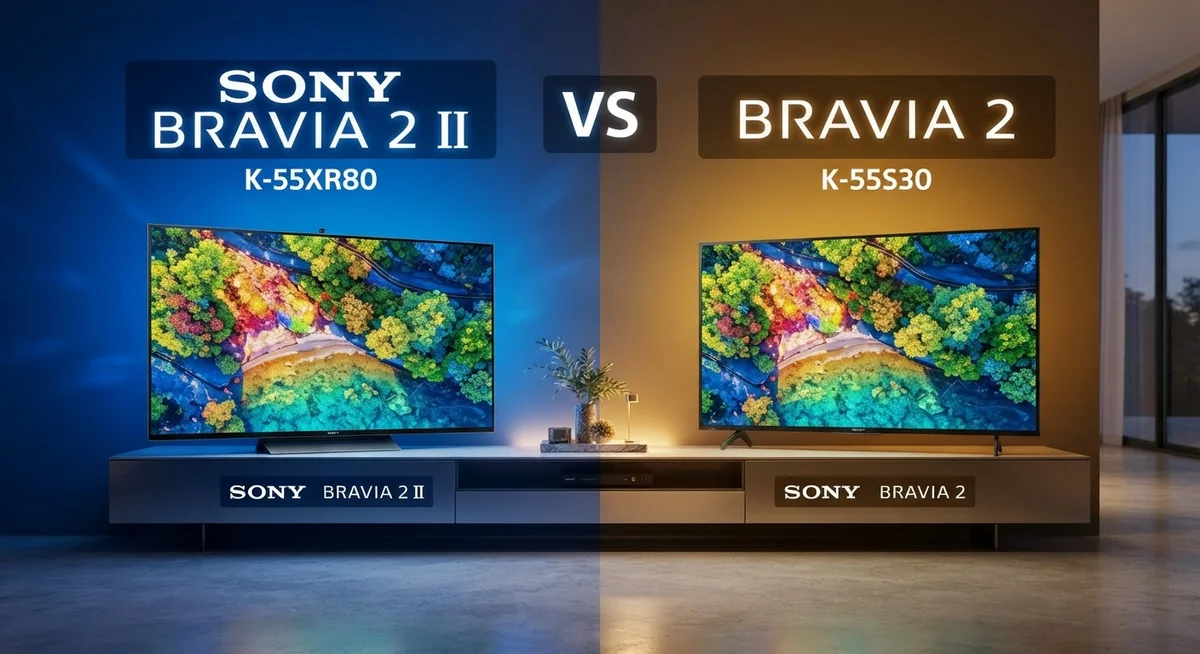
Picking a new TV can feel confusing. Two names often pop up together: the Sony BRAVIA 2 II and the Sony BRAVIA 2.
They look alike on paper and share many core features.
Both models offer 4K UHD resolution and use the same 4K Processor X1. They also run on Google TV and support Wi-Fi 6.
So what actually sets them apart?
That is exactly what this guide will help you figure out. We will break down specs, strengths, and weaknesses for each model side by side.
You will learn where each TV shines and where it falls short. By the end, you will know which Sony BRAVIA fits your viewing habits best.
Let’s get into the details.
Quick Comparison: SONY Bravia 2 Ii vs SONY Bravia 2
| Feature | SONY Bravia 2 Ii | SONY Bravia 2 |
|---|---|---|
| Resolution | 4K UHD (3840×2160) | 4K UHD (3840×2160) |
| Backlight | Direct-LED, 60Hz | Direct-LED, 60Hz |
| Processor | 4K Processor X1 | 4K Processor X1 |
| Smart Platform | Google TV OS | Google TV OS |
| Connectivity | Wi-Fi 6, Bluetooth 5.3 | Wi-Fi 6, Bluetooth 5.3 |
| Ports | 4 HDMI, 2 USB | 4 HDMI, 2 USB |
| Viewing Angle | Wide, group-friendly | Wide, group-friendly |
| HDR/Contrast Performance | Weak HDR, gray blacks | Weak HDR, gray blacks |
SONY Bravia 2 Ii Review

- Sony Bravia XR 85 inch X90L 4K HDR Full Array LED Smart TV 2023
- LIFELIKE PICTURE– The intelligent and powerful Cognitive Processor XR delivers a picture with wide dynamic...
- FULL ARRAY LED CONTRAST AND COLOR– See enhanced contrast with high peak brightness and billions of accurate...
Last update on 2026-09-14 / Affiliate links / Images from Amazon Product Advertising API
The SONY Bravia 2 II is a 4K UHD television built for viewers who want solid upscaling performance without breaking the bank. This model suits families and casual viewers who prioritize smooth content playback over advanced HDR features.
The TV features a Direct-LED backlight and the proven 4K Processor X1 engine, which excels at smoothing lower-quality content into sharper images. Google TV comes built-in, giving you instant access to streaming apps and a clean interface.
Wide viewing angles make this set ideal for group viewing in living rooms where people sit at different positions. The 60Hz refresh rate handles standard broadcasts and most streaming content without issue.
Real-world performance reveals limitations in brightness and contrast; blacks lean gray rather than deep, and HDR content lacks the punch brighter TVs deliver. If you watch mostly standard content or older films, you won’t notice these shortcomings as much.
Pros
- Excellent upscaling transforms low-resolution content into crisp, watchable images
- Wide viewing angles keep picture quality consistent from any seat in the room
- Google TV integration provides instant access to all major streaming platforms
- Direct-LED backlight delivers consistent brightness across the screen
Cons
- Insufficient brightness limits HDR performance and reduces contrast impact
- Black levels appear gray, reducing overall picture depth and immersion
- 60Hz refresh rate may feel sluggish for fast-action gaming or sports
SONY Bravia 2 Review

- POWERFUL TV PROCESSING: The 4K Processor X1 delivers a lifelike picture that is full of rich colors and sharp...
- ENHANCED COLOR AND FINE DETAILS: See natural and precise picture quality with a wide array of colors and dynamic...
- EVERYTHING YOU STREAM. ALL IN ONE SCREEN: Get access to all your favorite streaming apps in one place with Google...

Last update on 2026-09-14 / Affiliate links / Images from Amazon Product Advertising API
SONY BRAVIA 2
The SONY BRAVIA 2 is a 4K UHD television designed for viewers seeking a straightforward entry point into premium picture quality. It works best for casual watchers who prioritize content upscaling and group viewing over cutting-edge brightness and contrast performance.
This TV packs the 4K Processor X1 engine, which excels at smoothing lower-quality content into crisp, watchable images. The Direct-LED backlight provides consistent illumination across the screen, while Google TV OS gives you instant access to streaming apps.
Wide viewing angles keep picture quality stable from any seat in the room, making it ideal for family gatherings and shared spaces. The build feels solid and the connectivity options (Wi-Fi 6, Bluetooth 5.3, multiple HDMI ports) cover most modern devices without fuss.
Real-world viewing reveals some limitations in brightness and contrast depth. Blacks lean gray rather than deep, and HDR content doesn’t punch as hard as premium models, but everyday shows and movies look pleasant and clear.
Pros
- Excellent upscaling transforms low-resolution content into sharp, detailed images
- Wide viewing angles maintain picture quality from different seating positions
- Solid build quality with straightforward setup and Google TV integration
- Strong performance for standard content and casual viewing
Cons
- Insufficient brightness limits performance in bright rooms and with HDR content
- Poor contrast; blacks appear gray instead of truly dark
- Limited HDR impact compared to higher-end models
Head to Head: Key Differences
The SONY BRAVIA 2 II represents the newer generation in Sony’s entry-level 4K lineup. The original BRAVIA 2 remains a solid choice for first-time 4K buyers.
Both TVs share identical core hardware. They use the same 4K Processor X1 engine, Direct-LED backlighting, and 60Hz refresh rate across all screen sizes from 43 to 65 inches.
The BRAVIA 2 II edges ahead with marginal improvements under the hood. These refinements focus on processing power rather than dramatic picture quality jumps.
The original BRAVIA 2 still delivers the same fundamental viewing experience.
Upscaling performance stands out on both models. Lower-resolution content gets smoothed into sharp, watchable images. This matters most if you watch older films, streaming services, or cable TV regularly.
Where both struggle is brightness and contrast depth. Blacks appear gray instead of truly dark, and HDR content lacks the punch you see on premium models.
This limitation affects both the II and original equally.
Wide viewing angles remain a genuine strength on each TV. Picture quality stays consistent whether you sit directly in front or at an angle. Family gatherings and group viewing work well with either set.
Google TV integration works identically on both. You get access to streaming apps, voice control, and Wi-Fi 6 connectivity on the BRAVIA 2 II and its predecessor.
Choose the BRAVIA 2 II if you want the latest iteration with minor refinements. Pick the original BRAVIA 2 if you find better availability or prefer an established model.
Real-world performance between them feels nearly identical for most viewers.
Which One Should You Buy
Final Verdict
The Sony Bravia 2 II takes the win here. It shares the same panel and processing as the original Bravia 2, but it stands as Sony’s more current entry-level model.
Since both TVs perform almost identically, picking the newer version simply gives you peace of mind. You get the same 4K Google TV experience with the latest branding.
That said, the Bravia 2 remains a solid choice if you come across it. There is no real performance gap to worry about.
Best for each buyer
-
Sony Bravia 2 II: Best for buyers who want the most current version of Sony’s entry-level 4K Google TV, ideal for casual group viewing and everyday content upscaling.
-
Sony Bravia 2: Best for buyers who find this earlier model available and don’t need the latest iteration. Performance stays essentially identical to its successor.
Frequently Asked Questions
What’s the main difference between BRAVIA 2 II and BRAVIA 2?
The BRAVIA 2 II is the newer model. Both TVs share the same core hardware, including the 4K Processor X1 and Google TV operating system.
The II version brings marginal improvements under the hood, but day-to-day viewing feels nearly identical between them.
If you find the original BRAVIA 2 available, you won’t miss much by choosing it. The II simply offers peace of mind as the current generation.
Which TV has better picture quality?
Both models deliver the same upscaling performance. They transform low-resolution content into sharp, detailed images.
Your streaming shows and older movies will look crisp and clear.
However, both TVs struggle with brightness and contrast depth equally. Blacks appear gray rather than true black, and HDR content won’t shine as brightly as on higher-end Sony models.
This limitation affects both the II and original in the same way.
Are the viewing angles good on both?
Yes. Wide viewing angles remain a genuine strength on each TV. Picture quality stays consistent whether you sit directly in front or off to the side.
This makes both models ideal for family gatherings and group viewing.
Should I buy the BRAVIA 2 II or the original BRAVIA 2?
Choose the BRAVIA 2 II if you want the most current version available. Since both perform almost identically, the newer model simply gives you confidence you’re getting the latest technology.
Pick the original BRAVIA 2 if you find it available at your preferred retailer. You won’t sacrifice real-world performance.
Both excel at upscaling and maintain consistent picture quality from different seating positions.

Sili is a tech reviewer who cuts through the hype to find AI tools and gadgets that make life easier. She shares honest reviews and simple guides for everyday tech users.