Fujifilm X-E5 Review: Compact Mirrorless Camera Worth It?
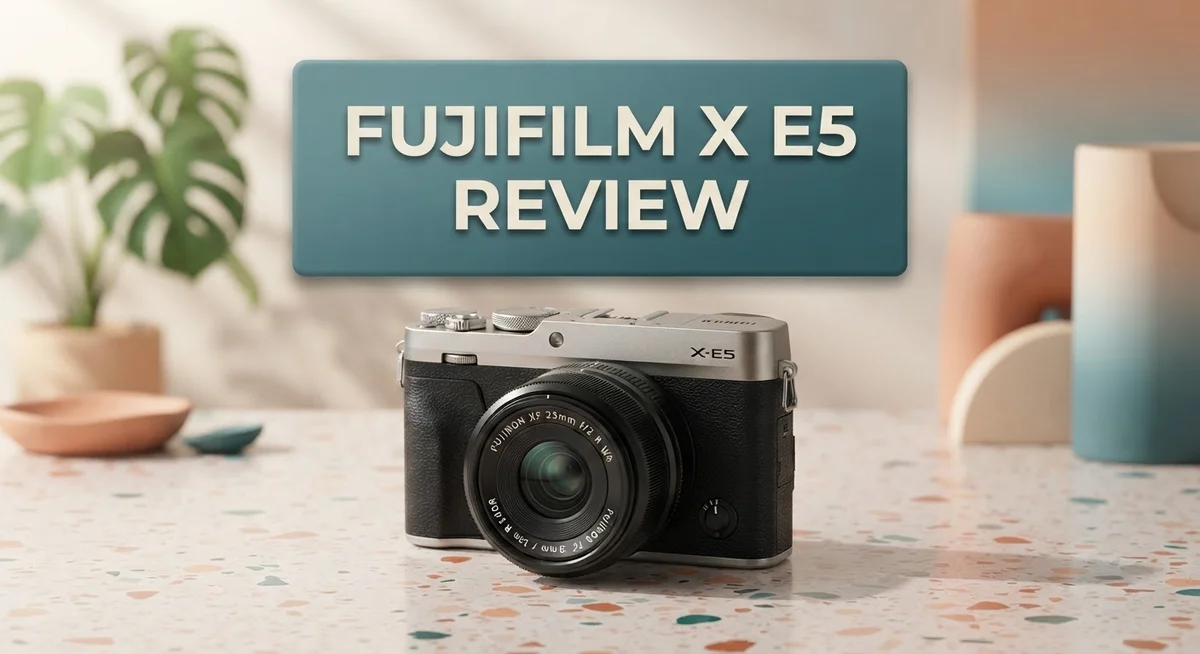
The Fujifilm X E5 brings something new to the table. It is the first X E series camera with built in image stabilization.
This small camera packs a big punch. It holds a 40.2MP sensor and a classic rangefinder look.
Photographers get smooth shots even in tricky light. The 5 axis IBIS system helps you shoot handheld with confidence.
Video creators will love the 6.2K recording option. It offers crisp, professional quality footage right out of the box.
This review covers everything you need to know. We will look at its design, speed, and real world performance.
Does the X E5 deserve a spot in your camera bag? Let’s find out if this stylish shooter matches its impressive specs.
In a Nutshell
The Fujifilm X E5 mixes classic looks with modern tech. Here is what stands out when you look closely at this camera.
-
First IBIS system in the X E series. This camera finally gets 5 axis stabilization. You get sharp shots even when your hands shake a bit.
-
Autofocus that keeps up with you. The system locks onto subjects fast. Moving kids or pets become easy targets for your lens.
-
A dial just for film looks. The film simulation dial lets you switch styles in seconds. No more digging through menus mid shoot.
-
Some speed bumps exist. The camera boots slowly. Image previews also take a moment to load on screen.
-
Memory card slot placement annoys users. Swapping cards takes more effort than it should. This might slow you down on busy shoot days.
-
Strong rivals surround this model. The Sony a6100 and Fujifilm X100VI offer stiff competition. Each brings its own strengths to the table.
This camera blends style with real function. It asks you to weigh its charm against a few rough edges.
Sensor and Image Quality
The 40.2MP APS-C CMOS sensor sits at the heart of what makes the X-E5 tick. This sensor delivers exceptional detail and clarity. You’ll notice sharp, vibrant images straight out of the camera.
Color science matters, and Fujifilm knows this well. The X-E5 uses Fujifilm’s famous film simulation engine. You get authentic color rendition without heavy post processing. The camera offers multiple film simulation modes built right into the dial. This means you can switch looks instantly while shooting.
Dynamic range performance is impressive for the class. The sensor captures detail in both shadows and highlights. You won’t lose information in tricky mixed lighting situations. This flexibility gives you more room to work in post production if needed.
The 5-axis IBIS system keeps your shots steady. You get 7.0 stops of stabilization at the center of the frame. The periphery offers 6.0 stops, which remains excellent. This matters most when you shoot handheld video or use longer lenses. Shutter speeds drop lower without blur, especially helpful in dim environments.
Video performance stands out for a camera this size. The 6.2K recording option gives you 10-bit color depth. You’re working with 4:2:2 chroma sampling at 200 Mbps bitrate. This means professional grade footage with plenty of color information. You can grade these files heavily in post without banding or artifacts.
Autofocus performance keeps pace with moving subjects. The camera locks onto faces and eyes reliably. Continuous tracking works well for both stills and video. You won’t experience hunting or hesitation in normal conditions.
Noise levels stay low even at higher ISOs. The sensor handles sensitivity well up to ISO 3200. Beyond that, you’ll see grain increase, but it remains manageable. This gives you shooting flexibility in low light without sacrificing too much quality.
The overall image quality justifies the sensor’s resolution. You get fine detail, accurate colors, and smooth tones. Whether you shoot stills or video, the X-E5 delivers professional results consistently.

- Get the stunning looks of the iconic FUJIFILM X100VI with the added creative flexibility of interchangeable lenses...
- FUJIFILM X-E5 echoes the timeless style of rangefinder film cameras and features a stunning machined aluminum...
- A first for X Series cameras, FUJIFILM X-E5 features a customizable Film Simulation dial. Neatly placed under the...

Last update on 2026-10-04 / Affiliate links / Images from Amazon Product Advertising API
Design and Build Quality
The X E5 feels solid in your hands from the moment you pick it up. Fujifilm crafted this camera with a vintage rangefinder aesthetic that appeals to photographers who love classic designs. The body combines aluminum and magnesium alloy materials that resist bumps and daily wear.
The camera measures just 122.9 x 83.8 x 49.5mm, making it genuinely pocketable. Weight sits at 557 grams with battery and card included, so you won’t feel fatigued during long shooting sessions. The grip has enough texture to prevent slipping, even with wet hands.
Build quality shows attention to detail throughout. The shutter button sits in the right spot for your index finger. The dials turn smoothly without feeling loose or fragile. Seals around the battery compartment and SD card slot keep moisture out during light rain or humid conditions.
One practical concern emerges with the memory card access. The slot placement requires you to open the battery door, which feels awkward during shoots. You cannot swap cards quickly without removing the battery first. This design choice frustrates users who shoot multiple cards in a session.
The film simulation dial on top represents authentic Fujifilm heritage. You rotate it to access different color profiles without diving into menus. This tactile approach beats scrolling through digital options on a screen. The dial clicks into place with satisfying precision.
The rear screen measures 3 inches with 1.62 million dots. It articulates, allowing you to tilt it up or down for creative angles. The viewfinder offers 100 percent coverage with 0.62x magnification, giving you a clear view of your subject.
Connectivity includes USB Type-C, HDMI, and a 3.5mm headphone jack. These ports sit on the camera’s sides, accessible without removing lenses or accessories.
Overall, the X E5 demonstrates solid engineering and thoughtful industrial design. The vintage styling appeals to enthusiasts while modern materials ensure durability. The build quality justifies regular professional use, though that memory card slot could use rethinking in future models.
Video and Autofocus Performance
The X E5’s autofocus system represents a significant leap forward for the X E series. Fujifilm equipped this camera with phase detection pixels across the sensor, giving you fast and accurate focus tracking.
Real world performance shows the autofocus locks onto subjects quickly. Moving subjects stay sharp even when they shift across the frame. The camera handles both stills and video focus transitions smoothly without hunting or hesitation.
Eye AF and face detection work reliably across different lighting conditions. When you point the camera at a person, it prioritizes their eyes automatically. This feature saves time during portrait sessions and keeps your subject sharp when composition matters most.
Video autofocus performance deserves special attention. The X E5 delivers smooth focus pulls during 6.2K recording without the jerky transitions you sometimes see in smaller cameras. Continuous autofocus tracking maintains subject sharpness as you move or as your subject moves through the scene.
The 5-axis IBIS system complements the autofocus capabilities perfectly. While autofocus keeps subjects sharp, the stabilization system eliminates camera shake during handheld shooting. You get steady footage at slower shutter speeds, which opens up creative options in low light situations.
One practical advantage emerges during video work. The combination of reliable autofocus and effective stabilization means you can shoot professional looking footage without tripods or gimbals. This makes the X E5 genuinely portable for content creators who move between locations frequently.
Focus peaking and focus magnification tools help manual focus users dial in precision. These features display on the rear screen and in the electronic viewfinder, giving you clear visual feedback during manual adjustments.
Battery life during extended autofocus use remains adequate, though continuous video recording does drain power faster than stills shooting. Carrying spare batteries makes sense for full day video projects.
The autofocus system’s performance justifies the camera’s position as a serious content creation tool. Whether you shoot stills or video, the focusing mechanisms keep pace with your creative demands without creating frustration or missed shots.
Top 3 Alternatives
Sony Alpha A6400

- Sony USA Authorized. A6400 with 16–50mm lens, 64GB Extreme PRO card, NP-FW50 battery, Photo Video Art Suite...
- Complete Mirrorless Camera Kit – The Sony a6400 comes bundled with the 16–50mm OSS power zoom lens, offering...
- 24.2 MP APS-C Sensor with Stunning Detail – Capture crisp, high-resolution images with the a6400’s 24.2 MP...
Last update on 2026-10-04 / Affiliate links / Images from Amazon Product Advertising API
The Sony Alpha A6400 offers fast autofocus performance that rivals professional cameras. Its 425 phase-detection autofocus points cover most of the frame, making it excellent for tracking moving subjects. The camera shoots 11 frames per second, which helps you capture decisive moments without missing shots.
The 24.2-megapixel sensor delivers sharp images in various lighting conditions. Real-time Eye AF keeps focus locked on faces, even when subjects move around the scene. The compact body fits easily in camera bags, making it perfect for travel photography.
Canon EOS M50 Mark II

- 24.1 megapixel (aps-c) cmos sensor with iso 100-25600 (h: 51200).
- digic 8 image processor with auto lighting optimizer.
- improved dual pixel cmos af and eye detection af (still/movie servo af support).
Last update on 2026-10-04 / Affiliate links / Images from Amazon Product Advertising API
Canon’s EOS M50 Mark II combines ease of use with solid image quality. The camera features a 24.1-megapixel sensor and dual pixel autofocus that works smoothly during video recording. Its articulating screen flips out for selfies and vlogging, which many content creators appreciate.
The camera shoots 4K video at 24p, though 1080p recording offers more frame rate options. Continuous autofocus performs well when filming moving subjects. The built-in microphone jack lets you connect external audio equipment for better sound quality.
Nikon Z fc

- Bundle Kit Items Include: 1 x Nikon Zfc Mirrorless Camera (Silver) with 16-50mm Lens, 1 x SanDisk SecureDigital...
- The Nikon Zfc Mirrorless Camera effortlessly combines retro design with advanced technology, catering to content...
- The Nikon Zfc’s retro design, inspired by classic SLR cameras, adds timeless charm while offering modern features...
Last update on 2026-10-04 / Affiliate links / Images from Amazon Product Advertising API
Nikon’s Z fc brings retro styling with modern performance. The 20.9-megapixel sensor produces clean images with accurate colors. Autofocus covers the entire frame with 209 focus points, ensuring you can focus on subjects anywhere in your composition.
The camera shoots 4K video at up to 30p and handles 1080p recording at 120p for slow-motion effects. The compact Z-mount design opens doors to Nikon’s growing lens library. Battery life reaches approximately 280 shots per charge, which works well for day trips and casual shooting sessions.
Stabilization and Handling
The X E5 brings in-body image stabilization to the X E series for the first time, and this changes how you shoot. The 5-axis IBIS system delivers 7.0 stops of correction at the center and 6.0 stops at the edges. You get noticeably sharper handheld shots, especially in low light or with longer lenses.
Stabilization makes a real difference during video work. The system keeps footage smooth without relying on digital cropping. Your 6.2K video stays steady even when you move around a scene. This feature alone opens up new creative possibilities for content creators.
The camera’s compact size works in your favor here. At just 122.9 x 83.8 x 49.5mm, the X E5 feels light and nimble in your hands. The vintage rangefinder styling doesn’t sacrifice modern ergonomics. Your grip remains secure during handheld shooting, and the controls sit exactly where you expect them.
Build quality supports confident handling. The camera feels solid without being heavy. Materials throughout show careful attention, and nothing feels cheap or flimsy. You can shoot for hours without hand fatigue creeping in.
One practical concern surfaces with everyday use. The memory card slot sits in an awkward position that makes access difficult. You’ll need patience when swapping cards, especially during fast paced shooting sessions. This design choice frustrates many users despite the camera’s otherwise thoughtful layout.
The autofocus system complements the stabilization beautifully. Real world performance shows quick subject acquisition across different lighting conditions. Eye AF and face detection work reliably, which means your stabilized shots actually stay focused on what matters. Focus peaking and magnification tools help when you need manual control.
Battery performance holds steady during extended handheld shooting. The IBIS system draws power, but you won’t see dramatic drain during typical sessions. Continuous video recording does drain the battery faster, so carry a spare if you plan long shooting days.
The X E5 handles like a camera that understands what photographers actually need. Stabilization, solid construction, and reliable autofocus combine to make handheld shooting a genuine pleasure.
User Experience and Interface
The X E5’s interface strikes a balance between simplicity and functionality. You navigate menus using a rear touchscreen combined with physical buttons. The touchscreen responds quickly to your taps, and you can swipe to adjust settings during shooting.
The physical control layout feels intuitive once you spend time with the camera. The top plate houses the shutter button, mode dial, and the iconic film simulation dial. Your thumb naturally finds the rear controls without looking away from the viewfinder.
The electronic viewfinder displays information clearly. You see real time exposure preview, focus peaking, and histogram data simultaneously. The 3.7 million dot resolution means text remains sharp and readable. Magnification reaches 0.62x, giving you a good view of your composition.
Menu organization follows Fujifilm’s established structure. Most photographers find common settings within two or three menu levels. Function buttons let you customize quick access to frequently used features. You can assign different functions to multiple buttons based on your shooting style.
One area worth noting involves the boot time. The camera takes longer than expected to power up from sleep mode. This means you might miss quick moments while waiting for the camera to fully wake. Image preview on the rear screen also shows a slight delay after capture, though it doesn’t affect shooting speed.
The touchscreen adds modern convenience without overwhelming traditional controls. You can use touch to focus, adjust exposure, or navigate menus. Alternatively, you can disable touch functions if you prefer purely mechanical operation.
Battery life displays clearly in the menu system. You know exactly how many shots remain before needing a charge. The USB Type C port allows quick charging between sessions.
Overall, the interface respects your workflow. Physical controls remain the primary method of operation. Digital features enhance rather than complicate your experience. Whether you shoot manually or rely on autofocus, the camera responds to your input without unnecessary friction or confusion.
Pros and Cons
Pros
- First IBIS in the X-E series brings 7.0 stops of stabilization for handheld video and low light shooting
- Advanced autofocus system with reliable eye AF and face detection across varying lighting conditions
- Professional video capabilities including 6.2K recording, 10-bit color, and 4:2:2 sampling at 200 Mbps
- Compact rangefinder design with vintage charm and intuitive physical controls
- Film simulation dial lets you apply Fujifilm’s signature color profiles in camera
Cons
- Slow boot times and sluggish image preview can interrupt your workflow during quick shooting sessions
- Difficult SD card access makes swapping memory cards frustrating during active shoots
- Limited lens mount options compared to Sony and Canon systems may restrict your upgrade path
- Single USB-C port handles charging and data transfer, creating workflow bottlenecks
Who Should Buy It
Content creators and video enthusiasts will find the X-E5 genuinely useful. The 6.2K video capability paired with 10-bit color depth gives you professional output without needing external recorders. The stabilization system keeps handheld footage smooth during interviews or documentary work.
Photographers who shoot in low light conditions benefit significantly from the 7.0 stops of IBIS. You can use slower shutter speeds and still capture sharp images. This opens up creative possibilities during evening shoots or indoor events.
Travel photographers appreciate the compact rangefinder design. The camera fits easily into bags without the bulk of larger bodies. The vintage styling appeals to those who value aesthetics alongside performance.
Street photographers gain from the intuitive control layout. The film simulation dial lets you preview color palettes before shooting. This speeds up your creative decision making during active sessions.
Hybrid shooters who blend stills and video will love the advanced autofocus system. Eye AF and face detection work reliably across different lighting situations. You won’t struggle to maintain focus during challenging conditions.
Professionals upgrading from older X-E models get a significant feature jump. IBIS was missing from previous generations, so this represents a major capability boost. The UHS-II SD card support handles fast workflows smoothly.
However, the X-E5 may frustrate users who need rapid shooting sessions. Slow boot times and sluggish image preview interrupt quick workflows. If you shoot fast paced events where every second counts, this could become annoying.
Users who swap memory cards frequently will find the difficult SD card access frustrating. The design makes accessing the slot cumbersome during active shoots.
Casual photographers might find the feature set overwhelming. Simpler models exist if you just want basic image capture without advanced video tools.
The X-E5 shines for creative professionals who value stabilization, video quality, and compact design. It suits photographers who appreciate hands on control and film simulations. If your workflow demands speed and convenience, other options might serve you better.
Final Verdict
The Fujifilm X E5 earns its place as a strong choice for photographers who want style and substance together. It blends a vintage design with modern technology in a way few cameras manage.
This camera shines brightest for hybrid creators. If you shoot both photos and videos, the X E5 adapts to your needs without missing a beat.
The first ever IBIS system in the X E series changes the game for this lineup. Handheld shooting becomes easier, especially in dim settings where steady shots once felt impossible.
Video capabilities push this camera into serious territory. Creators who need 6.2K footage with rich color depth will find real value in what the X E5 offers.
Still, this camera is not perfect. The boot time lags behind what some photographers expect from a camera in this class.
Memory card access also presents a minor annoyance. Shooters who swap cards often during sessions may find this design choice frustrating over time.
Despite these quirks, the pros outweigh the cons for most users. The compact body and intuitive controls make daily shooting enjoyable rather than stressful.
Compared to rivals like the Sony a6100 or the Fujifilm X M5, the X E5 stands out through its unique blend of retro charm and modern function. It does not try to be everything to everyone.
Instead, it focuses on delivering a focused experience for specific types of photographers. Street shooters, travel enthusiasts, and content creators benefit most from what this camera brings to the table.
If you already love Fujifilm’s ecosystem, the X E5 feels like a natural progression. It builds on what came before while adding features that matter today.
For photographers searching for a camera that balances form and function, the X E5 deserves serious consideration. It rewards patience with its quirks and delivers genuine quality in return.
This is a camera built for those who care about the craft of photography, not just the convenience of it.
Frequently Asked Questions
Does the X-E5 have image stabilization?
Yes. The X-E5 is the first X-E series camera to include in-body image stabilization (IBIS). It delivers 7.0 stops of stabilization at the center and 6.0 stops at the periphery. This makes handheld shooting much steadier, especially in low light or when using longer lenses.
What video specs does this camera offer?
The X-E5 shoots 6.2K video with 10-bit color depth and 4:2:2 chroma sampling. It records at 200 Mbps, giving you professional-grade footage for content creation. This puts the camera squarely in serious video territory for hybrid shooters.
How fast is the autofocus system?
The camera uses an advanced autofocus system that works across varying lighting conditions. It tracks subjects smoothly and responds quickly to focus changes. This makes it reliable for both stills and video work.
What are the main drawbacks I should know about?
Two issues stand out. First, the camera has slow boot times and sluggish image preview, which can interrupt your workflow during quick shooting sessions. Second, SD card access is difficult, making memory card swaps frustrating during active shoots. These quirks don’t break the camera, but they’re worth knowing before you buy.
Who should buy the X-E5?
This camera works best for hybrid creators who blend stills and video. Travel photographers love its compact rangefinder design. Street photographers appreciate the intuitive control layout and film simulation dial. Professionals upgrading from older X-E models get a significant feature jump.

Sili is a tech reviewer who cuts through the hype to find AI tools and gadgets that make life easier. She shares honest reviews and simple guides for everyday tech users.