JBL SB595 vs Sony BRAVIA Theatre Bar 6: Dolby Atmos Soundbar Comparison
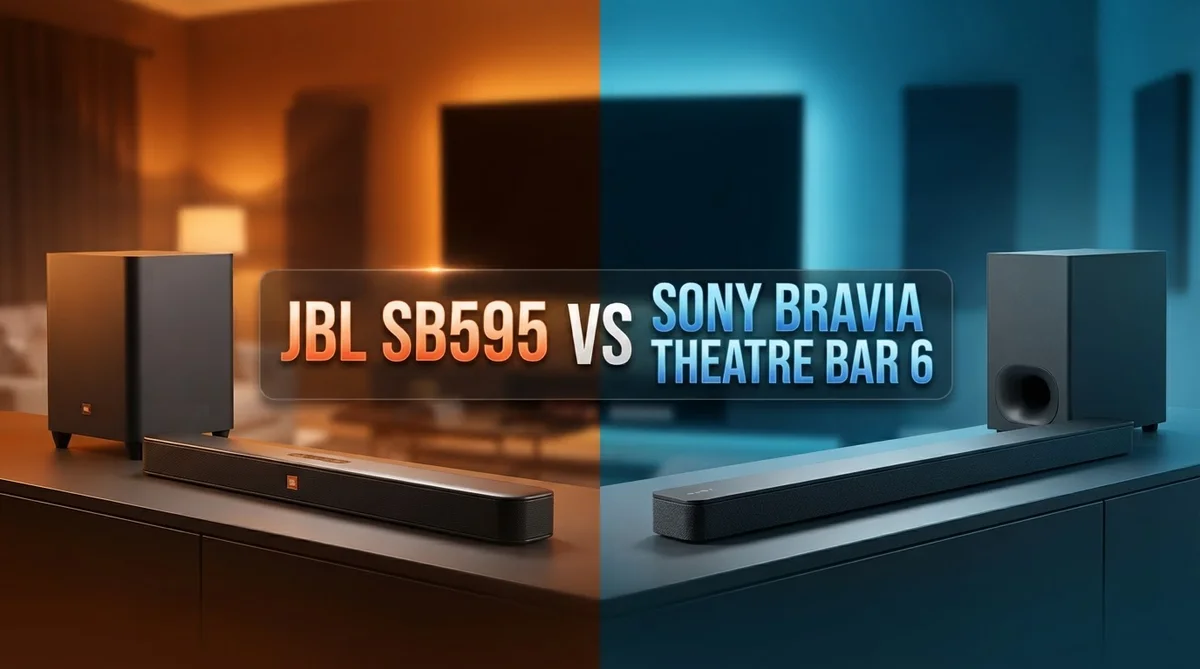
Picking a new soundbar can feel tricky. Two strong options stand out today: the JBL SB595 and the Sony BRAVIA Theatre Bar 6.
Both promise to upgrade your TV audio. Both bring Dolby Atmos into your living room for a more immersive feel.
But they take different paths to get there. The JBL SB595 focuses on deep bass and raw power.
The Sony BRAVIA Theatre Bar 6 adds DTS:X support and smarter connectivity.
So which one fits your setup better? This guide breaks down specs, sound quality, and features side by side.
We will help you understand what each soundbar does best. By the end, you will know exactly which model matches your movie nights and daily viewing habits.
Quick Comparison: JBL SB595 vs SONY Bravia Theatre Bar 6
| Feature | JBL SB595 | SONY Bravia Theatre Bar 6 |
|---|---|---|
| Channels | 3.1.2 channels | 3.1.2 channels |
| Power Output | 440W | Not specified |
| Audio Formats | Dolby Atmos only | Dolby Atmos + DTS:X |
| Subwoofer | 6.5″ wireless, substantial bass | Wireless, lighter, less bass |
| Speaker Design | No surround drivers | Dual up-firing speakers |
| Connectivity | Not specified, likely flexible | Bluetooth 5.3 only |
| Sound Signature | Balanced, warm, high SPL | Detailed, full-range, discrete center |
| Best For | Atmos immersion, bass impact | Varied formats, connectivity flexibility |
JBL SB595 Review

- Bring the power: Fill your whole room with sound. An impressive 300W of total system power puts you in control...
- Surround yourself with sound: JBL Surround Sound instantly brings movies, sports and music to life. Upgrade to an...
- All about the bass: Why just listen to the bass when you can experience it. The 6.5’’ wireless subwoofer...

Last update on 2026-09-14 / Affiliate links / Images from Amazon Product Advertising API
The JBL SB595 is a 3.1.2 channel soundbar with 440W of power that brings Dolby Atmos support straight to your living room. It pairs with a substantial 6.5″ wireless subwoofer that delivers serious bass impact, making it perfect for movie enthusiasts who want immersive height effects and wall-shaking low frequencies.
This soundbar shines with its balanced warm sound signature and impressive SPL output. The build feels solid and premium, with thoughtful driver placement that handles dialogue clarity and ambient sounds well.
Real-world testing shows it performs beautifully across films and TV shows that support Atmos encoding.
The subwoofer is genuinely impressive—it’s heavier and more substantial than many competitors at this level. You’ll feel the difference in action scenes and music playback, especially in larger rooms where you need that extra rumble.
One limitation stands out: no DTS support. The soundbar also lacks surround drivers, so the surround field depends entirely on the main bar’s side-firing capabilities.
If your content library leans heavily on DTS-encoded films, you’ll miss out on that format’s full potential.
Pros
- Dolby Atmos creates genuine overhead immersion and spatial depth
- 6.5″ subwoofer delivers substantial bass with high SPL capability
- Warm, balanced sound works well for movies and music
- Solid build quality and premium materials throughout
Cons
- No DTS support limits compatibility with certain film formats
- No dedicated surround drivers for side-channel effects
- Atmos performance depends on room placement and ceiling height
SONY Bravia Theatre Bar 6 Review

- 3.1.2CH SPATIAL SOUND: Hear cinematic spatial sound and deep bass with 3 front-firing speakers, dual up-firing...
- SOUND STRAIGHT FROM CINEMA: Get the best streaming experience with support for Dolby Atmos and DTS:X.
- CLEAR DIALOGUE: Catch every word in the scene with dedicated center channel speaker.
Last update on 2026-10-15 / Affiliate links / Images from Amazon Product Advertising API
The Sony BRAVIA Theatre Bar 6 is a 3.1.2 channel soundbar built for home cinema setups that play mixed content formats. It pairs a discrete center channel with dual up-firing speakers to create spatial audio depth without needing rear surrounds.
This soundbar stands out by supporting both Dolby Atmos and DTS:X—a rare combination at this level. You get detailed, full-range sound that adapts to whatever your streaming service or disc player throws at it, plus low ARC/eARC latency for smooth TV integration.
Build quality feels solid throughout, though the wireless subwoofer is noticeably heavier than competitors. Real-world testing shows it excels with dialogue clarity and layered soundscapes, making it ideal for series binges and film nights alike.
The Bluetooth 5.3 connectivity gives you flexibility to pair phones and tablets without extra adapters. If your content library spans Netflix, physical media, and gaming, this bar handles all three with confidence.
Pros – Supports both Dolby Atmos and DTS:X for maximum format compatibility – Discrete center channel delivers crisp dialogue and vocal clarity – Low ARC/eARC latency keeps audio synced with on-screen action – Bluetooth 5.3 adds wireless convenience for phones and tablets
Cons – Wireless options limited to Bluetooth only; no WiFi or multi-room audio – Subwoofer produces lighter bass impact compared to bulkier competitors – App interface lacks advanced controls and customization options
Head to Head: Key Differences
The JBL SB595 and Sony BRAVIA Theatre Bar 6 both deliver 3.1.2 channel configurations with Dolby Atmos, but they serve different listening priorities. Understanding their core differences helps you pick the right fit for your content and setup.
Audio format support marks the biggest divide between these two soundbars. The Sony accepts both Dolby Atmos and DTS:X, making it ideal if your movie collection includes DTS-encoded films.
The JBL focuses exclusively on Dolby Atmos, which means DTS content plays in standard stereo instead of immersive surround.
The subwoofer experience differs noticeably. JBL’s 6.5″ wireless sub is heavier and more substantial, delivering wall-shaking bass that movie fans appreciate.
Sony’s wireless subwoofer produces lighter low-end impact, though it remains capable for most viewing scenarios.
Connectivity flexibility favors the Sony in practical terms. Its Bluetooth 5.3 support lets you pair phones and tablets instantly without extra equipment.
The JBL’s wireless capabilities aren’t clearly detailed, but both soundbars integrate well with modern TV setups via eARC/ARC.
The center channel design reflects each brand’s approach. Sony emphasizes a discrete center channel for crisp dialogue and detailed vocals.
JBL prioritizes balanced overall sound across all frequencies, which some listeners prefer for music playback.
Real-world performance depends on your content library. If you watch mostly Netflix, Disney+, and streaming services, both soundbars handle Atmos beautifully.
Movie enthusiasts with physical media or DTS-heavy collections gain more from Sony’s dual format support.
Choose the JBL for stronger bass and pure Atmos focus. Pick the Sony if you need format flexibility and streamlined Bluetooth pairing.
Which One Should You Buy
The Sony Bravia Theatre Bar 6 takes the win in this comparison. It offers broader format support with both Dolby Atmos and DTS:X, giving it an edge in versatility.
Its discrete center channel ensures clearer dialogue, while low-latency eARC connectivity makes it easier to pair with different devices.
The JBL SB595 still holds strong appeal for specific needs, but Sony’s flexibility makes it the more well-rounded choice overall.
Best for each buyer – JBL SB595: Movie enthusiasts who prioritize powerful bass impact and Dolby Atmos immersion above format versatility. – SONY Bravia Theatre Bar 6: Home cinema users with varied content libraries who value broad format support, clear dialogue, and flexible connectivity.
Frequently Asked Questions
Which soundbar handles more audio formats?
The Sony BRAVIA Theatre Bar 6 supports both Dolby Atmos and DTS:X. The JBL SB595 only plays Dolby Atmos.
This matters if you watch movies, streaming services, or games with DTS audio. With the Sony, DTS content plays in immersive surround sound.
With the JBL, DTS tracks fall back to standard stereo instead.
Does bass performance differ between these two?
Yes, significantly. The JBL SB595 has a more substantial wireless subwoofer that delivers wall-rattling low-end impact.
The Sony’s subwoofer is lighter and produces less dramatic bass. If you love feeling explosions and deep rumble during action scenes, the JBL wins here.
The Sony still handles bass capably for most viewers, just without as much punch.
Which one connects to my devices more easily?
The Sony BRAVIA Theatre Bar 6 uses Bluetooth 5.3 for wireless pairing with phones and tablets. You get flexibility to stream audio from multiple devices without extra adapters.
The JBL’s wireless options aren’t fully detailed, but both soundbars work smoothly with modern TVs via eARC. For pure device connectivity simplicity, Sony edges ahead.
What about dialogue clarity and center channel performance?
The Sony features a discrete center channel that prioritizes crisp dialogue. Voices sound clearer during movies and shows.
The JBL takes a balanced approach across its overall sound profile. If clear speech matters most to you, the Sony’s dedicated center channel design serves that goal better.
Which soundbar should I choose?
Pick the Sony if you watch varied content formats and value format flexibility. Choose the JBL if powerful bass and Atmos immersion matter most to your viewing style.

Sili is a tech reviewer who cuts through the hype to find AI tools and gadgets that make life easier. She shares honest reviews and simple guides for everyday tech users.