JBL SB595 vs Sony HT-S2000: Which Soundbar Delivers Better Atmos & Power?
Picking a soundbar can feel like a big decision. Two strong options stand out today: the JBL SB595 and the Sony HT-S2000.
Both promise to upgrade your TV audio. But they take different paths to get there.
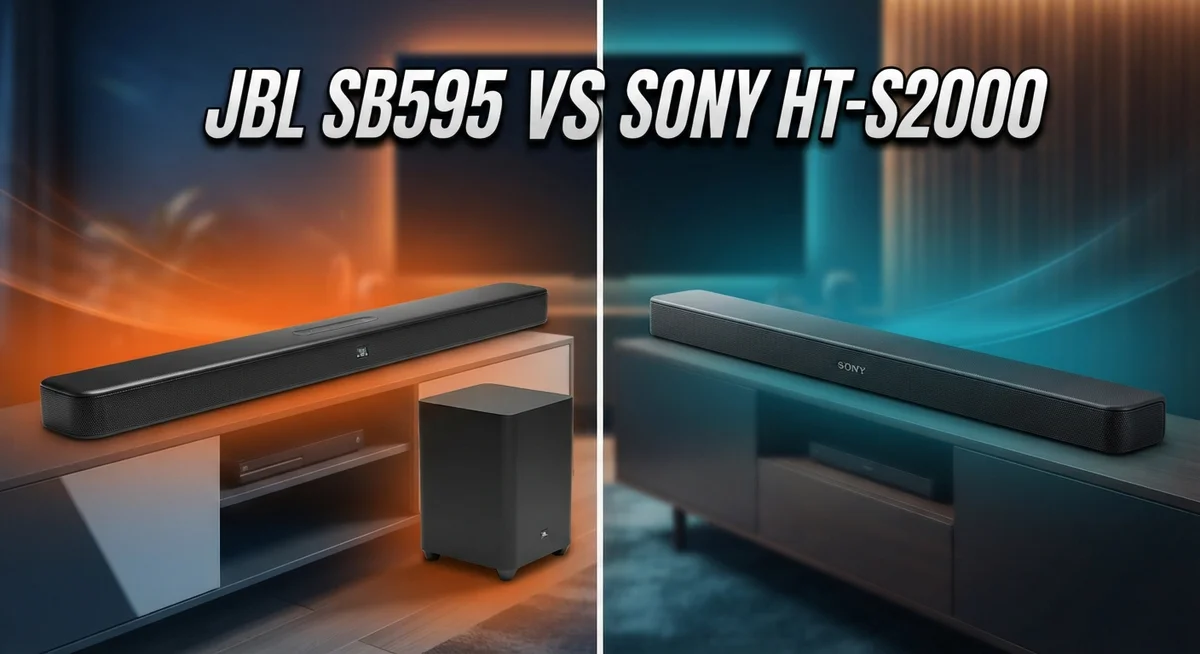
The JBL SB595 brings Dolby Atmos support and a wireless subwoofer for extra punch. The Sony HT-S2000 focuses on a simpler, all-in-one setup with detailed sound.
So which one fits your living room? This guide breaks down specs, strengths, and weaknesses side by side.
We will look at power output, immersion features, and ease of setup. By the end, you will know exactly which soundbar matches your viewing habits and space.
Quick Comparison: JBL SB595 vs SONY HT-S2000
| Feature | JBL SB595 | SONY HT-S2000 |
|---|---|---|
| Channels | 3.1.2 channels | 3.1 channels |
| Power Output | 440W | 250W |
| Subwoofer | 6.5″ wireless external | Built-in subwoofer |
| Surround Format | True Dolby Atmos | No height channels |
| Sound Quality | Balanced, warm, high volume | Detailed, warm sound |
| Design | Requires subwoofer placement | All-in-one simple design |
| Codec Support | No DTS support | Standard codec support |
| Best Use Case | Immersive movies/gaming | Casual TV viewing |
JBL SB595 Review

- Bring the power: Fill your whole room with sound. An impressive 300W of total system power puts you in control...
- Surround yourself with sound: JBL Surround Sound instantly brings movies, sports and music to life. Upgrade to an...
- All about the bass: Why just listen to the bass when you can experience it. The 6.5’’ wireless subwoofer...

Last update on 2026-09-14 / Affiliate links / Images from Amazon Product Advertising API
The JBL SB595 is a 3.1.2 channel soundbar system designed for people who want true immersive audio. This setup includes the main soundbar, a wireless 6.5″ subwoofer, and height channels that deliver Dolby Atmos sound.
The system pumps out 440 watts of power, which means loud, dynamic sound for movies and games. Its dedicated center channel keeps dialogue clear and crisp, while the external subwoofer handles deep bass without taking up much space in your soundbar itself.
Build quality feels solid with clean lines and a modern finish that fits most TV stands. The wireless subwoofer connects easily, so you skip messy cables running across your room.
Real-world performance shines during action scenes and immersive content where height channels make a real difference. You’ll notice sounds coming from above, creating a three-dimensional audio bubble around your listening area.
Pros
- Dolby Atmos support with height channels for true 3D sound
- High 440W power output delivers loud, impactful audio
- Wireless subwoofer eliminates cable clutter and offers placement flexibility
- Strong center channel clarity for dialogue-heavy content
Cons
- No DTS audio format support limits some streaming content compatibility
- Requires separate subwoofer placement planning in your room
- More complex setup compared to all-in-one soundbar alternatives
SONY HT-S2000 Review

- INCLUDED - Sony HTS400 2.1-Channel Soundbar, Wireless Subwoofer, Remote Control, 2x AC Power Cords, 2x AAA...
- IMMERSIVE SOUND QUALITY - Experience powerful audio with 330W total output and a 2.1-channel system, delivering...
- SLEEK DESIGN - Enhance your home entertainment setup with a sophisticated, minimalist soundbar and wireless...
Last update on 2026-10-15 / Affiliate links / Images from Amazon Product Advertising API
The Sony HT-S2000 is a 3.1 channel soundbar system built for people who want simple, quality audio without extra complexity. It delivers 250 watts of power with five active drivers that create detailed, warm sound perfect for everyday TV watching.
The all-in-one design means no separate subwoofer to place or connect. Side-firing ports help spread bass throughout your room, giving you adequate low-end extension in smaller spaces.
Build quality feels clean and modern with a compact footprint that fits most TV stands without dominating your setup. The system offers good channel separation, so dialogue stays clear and effects move smoothly across the soundstage.
Real-world performance shines during casual viewing where dialogue clarity matters most. It handles streaming content and regular broadcasts well, though it lacks the immersive height channels that serious movie fans seek.
Pros
- All-in-one design with no subwoofer cables or placement hassle
- Detailed, warm sound with excellent dialogue clarity
- Compact size fits smaller living rooms and tight spaces
- Good channel separation for the price range
Cons
- Lower 250W power output limits volume for large rooms
- No height channels or Dolby Atmos support
- Mixed user satisfaction reports on long-term reliability
Head to Head: Key Differences
The JBL SB595 and Sony HT-S2000 take different approaches to home audio. The JBL targets immersive entertainment, while the Sony keeps things simple and straightforward.
Power output separates these two significantly. The JBL delivers 440 watts of raw audio muscle, while the Sony produces 250 watts. This 76 percent difference means the JBL plays louder and hits harder during action sequences and intense gaming moments.
Height channels make a real difference for movie fans. The JBL includes 3.1.2 channels with Dolby Atmos support, creating a true 3D soundscape where effects move above your head. The Sony sticks with a traditional 3.1 setup, so you get left, center, right, and subwoofer only.
The subwoofer design reflects each brand’s philosophy. The JBL uses a wireless external 6.5 inch subwoofer that you place where it sounds best.
The Sony builds its subwoofer directly into the bar itself, eliminating setup complexity but limiting bass flexibility.
Setup complexity matters if you value simplicity. The Sony arrives as one unit ready to connect and play. The JBL requires you to position the subwoofer separately and pair it wirelessly, which takes more thought but gives you control over placement.
Sound character leans different directions too. The JBL emphasizes dynamic, immersive audio perfect for movies and games.
The Sony focuses on dialogue clarity and balanced warmth, making it ideal for TV shows and everyday listening.
Your choice depends on your priorities. Choose the JBL if you want height channels and maximum power for premium content. Pick the Sony if you prefer simplicity and excellent dialogue reproduction for casual viewing.
Which One Should You Buy
The JBL SB595 takes the win in this comparison. It brings more power, true Dolby Atmos with a dedicated height channel, and a wireless subwoofer to the table.
This combo creates a fuller and more immersive sound experience. Movies and games feel bigger and more alive with this setup.
The Sony HT-S2000 still holds its own though. It works great as a simple upgrade for everyday viewing in smaller rooms.
Best for each buyer – JBL SB595: Movie and gaming enthusiasts who want immersive, high-powered sound with Dolby Atmos height effects. – Sony HT-S2000: Casual viewers in smaller spaces who want a simple, all-in-one soundbar upgrade for everyday TV watching.
Frequently Asked Questions
Which soundbar handles gaming better?
The JBL SB595 wins for gaming. Its 440W power output and height channels create immersive 3D sound that makes explosions, footsteps, and ambient effects feel real.
Dolby Atmos support means you hear sounds from above, which matters in games like Fortnite or Call of Duty.
The Sony HT-S2000 works fine for casual gaming. You get clear dialogue and decent effects, but no overhead audio.
Games sound flat compared to the JBL’s layered approach.
Does the Sony really need no setup?
Yes. The Sony arrives as one complete unit with a built-in subwoofer.
You unbox it, mount it, and connect your TV. No cables to hide or subwoofer placement decisions to make.
The JBL requires more work. You place the soundbar, then position the wireless 6.5″ subwoofer somewhere in your room.
This takes extra time but gives you flexibility to find the best bass spot.
Which handles movie soundtracks better?
The JBL SB595 excels with movies. Atmos support means you hear rain falling from above or planes flying overhead.
The dedicated center channel keeps dialogue crisp while surrounds handle ambient sound.
The Sony delivers warm, detailed sound too. Dialogue stays clear and bass works well.
You miss the overhead dimension, but casual movie nights sound good.
Can I add speakers to either system later?
The JBL SB595 stays as is. No expansion options exist.
You get what you buy.
The Sony also lacks expansion. Both are closed systems.
Choose wisely at purchase time since upgrades aren’t possible.

Sili is a tech reviewer who cuts through the hype to find AI tools and gadgets that make life easier. She shares honest reviews and simple guides for everyday tech users.