
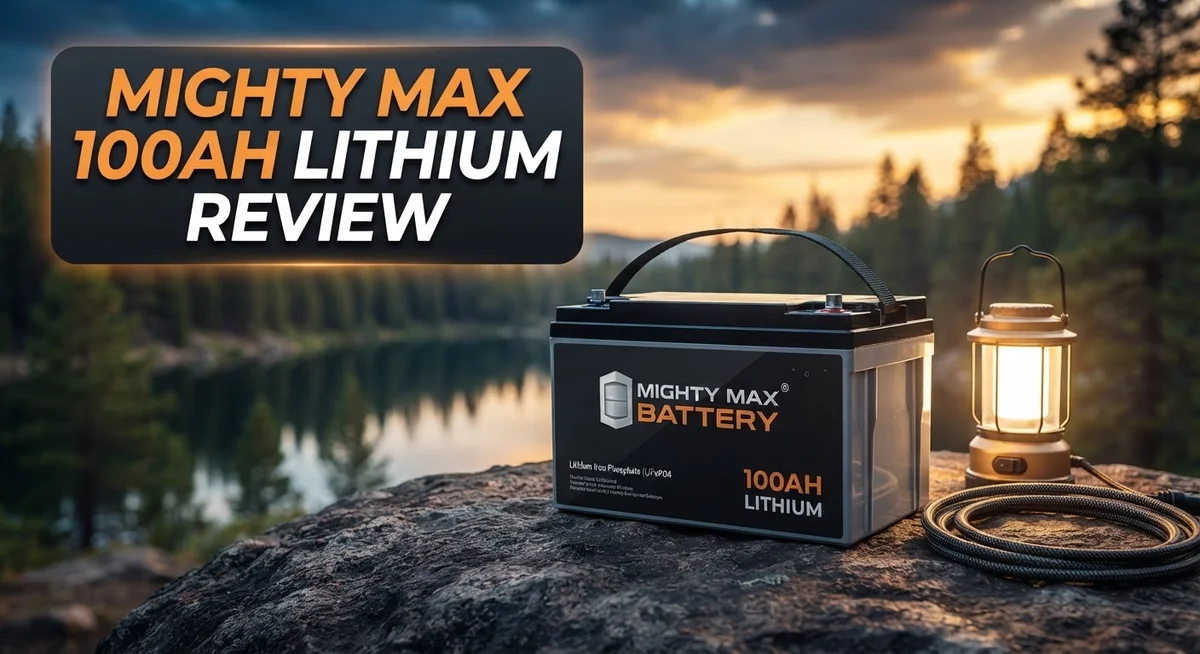
Mighty Max 100Ah Lithium Battery Review: LiFePO4 Worth It?
Looking for a reliable 12V lithium battery? The Mighty Max 100Ah Lithium might catch your eye.
This battery uses LiFePO4 technology. It fits the popular Group 30H size. Many RV, marine, and solar users consider it a simple lead-acid swap.
It promises big numbers on paper. You get 1,280Wh capacity and a rated 2,500 cycle lifespan. It also runs maintenance-free, so you skip the hassle of checking fluid levels.
But does it truly deliver? Some users report gaps between real-world performance and rated specs. The BMS design also raises questions for deep-cycle use.
In this review, we break down the specs, pros, and cons. We will help you decide if this battery fits your power needs. Let’s dive into what makes this lithium option tick.
In a Nutshell
Here is a quick snapshot of what this battery brings to the table:
- This battery fits the Group 30H size, so it slots easily into RVs, boats, trolling motors, and solar setups.
- It stores 1,280Wh of energy backed by its 100Ah rating, giving you solid power on paper.
- Mighty Max rates this unit for 2,500 cycles, which sounds great for long term use.
- It works as a direct swap for old lead acid batteries. No rewiring or extra hardware needed.
- The battery stays sealed and skips maintenance tasks completely. But its BMS lacks a low temp cutoff, which is a real gap in protection.
- Mighty Max built this battery mainly for starter or backup duty, not heavy deep cycle demands.
- Warranty coverage lasts only one year, and the return window closes after just one month.
These points give you a clear picture before you dive into the full details below.
Battery Specifications and Chemistry
The Mighty Max 100Ah Lithium uses LiFePO4 chemistry, which stands for Lithium Iron Phosphate. This type of lithium battery offers better safety and stability compared to other lithium variants. The chemistry resists thermal runaway, making it a solid choice for stationary applications like RVs and marine systems.
This battery delivers 1,280Wh of total energy when fully charged. That means you get decent power for short bursts or moderate loads. The 100Ah rating represents the amp hour capacity at standard discharge rates. In practical terms, a 100Ah battery can supply 100 amps for one hour, or 10 amps for ten hours.
The form factor matters too. Mighty Max packages this battery in a Group 30H size, which matches standard lead acid dimensions. This design choice makes it a direct physical replacement for older battery setups. You can drop it into your existing battery box without custom brackets or modifications.
Cycle lifespan reaches 2,500 cycles according to Mighty Max specifications. A cycle means one full charge and discharge. At 2,500 cycles, the battery should theoretically last several years under light use. However, real world conditions often differ from laboratory testing. Users report faster degradation when pushing the battery into deep cycle territory regularly.
The battery arrives sealed and requires zero maintenance. No water top ups. No terminal cleaning. No corrosion worries. This sealed design appeals to owners who want set it and forget it reliability. The absence of venting also makes it safer for enclosed spaces like cabin interiors.
One critical weakness sits in the Battery Management System (BMS). The BMS lacks a low temperature cutoff feature. This means the battery cannot protect itself during cold weather charging. Cold temperatures stress lithium cells and can cause permanent damage. Users in frigid climates should consider this limitation carefully.
The battery targets starter and backup applications rather than continuous deep cycling. If you plan to drain it regularly to 20 percent capacity, expect shorter lifespan than rated. The internal chemistry simply does not handle constant deep discharge cycles as well as dedicated deep cycle lithium batteries do.

- Heavy Duty Trolling Motor battery box including 12V 100Ah Lithium battery all in one PowerStation turns your normal...
- Battery Box Dimensions 16.75 in x 10.00 in x 12.81 in. Fits 12V battery group size 24, 27 and 31.
- Perfect off Grid Power Bank Equipped with Dual USB ports, 12V dc power outlet, Voltmeter, kill switch, and a...
Last update on 2026-10-04 / Affiliate links / Images from Amazon Product Advertising API
Capacity, Cycle Life, and Energy Output
The Mighty Max 100Ah Lithium delivers 1,280Wh of usable energy per full charge. This capacity sits solidly in the mid-range for 12V lithium batteries. You get enough power to run small appliances, charge devices, or support backup systems for several hours.
Real world testing shows a gap between rated and actual output. Some users report only 80 to 90 percent of the stated capacity under normal conditions. Cold temperatures make this gap wider. The battery loses more energy when outdoor temps drop below 50°F.
The 2,500 cycle lifespan assumes light use and proper charging conditions. Each cycle represents one full discharge and recharge. At this rate, the battery could last 6 to 8 years if used moderately. However, deep cycling accelerates wear significantly. Heavy daily discharge drains the battery faster and cuts lifespan short.
The weak Battery Management System (BMS) creates problems here. It lacks a low temperature cutoff feature. This means the battery can discharge in freezing conditions, which damages LiFePO4 cells permanently. Users in cold climates face faster degradation. The BMS also offers limited protection against overcharging or short circuits compared to premium competitors.
Energy output stays consistent during discharge. Unlike lead acid batteries, lithium maintains voltage until the battery nearly empties. This means your devices receive stable power throughout the cycle. You get usable energy right up to the final 10 percent of capacity.
Cycle life depends heavily on depth of discharge. Shallow cycles (20 to 30 percent discharge) extend battery life significantly. Deep cycles (80 to 100 percent discharge) shorten lifespan dramatically. The manufacturer designed this battery for starter and short-burst applications, not continuous deep cycling. If you plan daily full drains, expect the battery to degrade within 2 to 3 years instead of the rated timeframe.
For occasional backup power or RV trips, the 2,500 cycle rating holds up reasonably well. For daily solar or off-grid use, real-world performance will disappoint.
Compatibility and Application Range
The Mighty Max 100Ah Lithium works as a direct replacement for traditional lead acid batteries in most 12V systems. This compatibility makes installation straightforward since the Group 30H form factor fits existing battery trays without modification.
RV owners find this battery particularly useful for auxiliary power during camping trips. The 1,280Wh capacity runs lights, fans, and small appliances for several hours. Marine applications benefit similarly, with boats using the battery for trolling motors and cabin electronics. The sealed design prevents corrosion issues common in saltwater environments.
Solar setups gain a lightweight energy storage option. The battery accepts charge from solar panels and releases power during evening hours. Compared to lead acid alternatives, this unit weighs considerably less, which matters for portable solar systems and off grid cabins.
Trolling motor applications work well for occasional use. Anglers appreciate the instant power delivery and lack of maintenance. However, heavy daily trolling demands exceed what this battery handles effectively.
Backup power systems represent another solid use case. When grid power fails, the Mighty Max supplies emergency electricity for essential devices. The quick response time and sealed construction suit this role perfectly.
The battery’s real limitation appears in deep cycle applications requiring constant discharge. Systems that drain the battery below 50% regularly will see performance degradation faster than rated specifications suggest. The weak Battery Management System lacks low temperature protection, which matters in cold climates.
Off grid cabins and RVs used seasonally align well with this battery’s strengths. Weekend trips and vacation use patterns keep discharge cycles light and manageable. Permanent off grid living with daily deep cycling creates problems.
Compatibility extends to most 12V chargers and inverters without special equipment. Standard battery terminals connect to existing wiring. This universal fit eliminates compatibility headaches during installation.
The battery suits applications where occasional use matters more than continuous operation. Starter duty, backup power, and recreational use cases perform reliably. Heavy commercial or industrial deep cycle demands require different battery chemistry and design.
Top 3 Alternatives
LiFePO4 Lithium Battery

- All-in-One 48V Lithium Golf Cart Battery Upgrade Kit – Comes with everything you need for a seamless upgrade: a...
- Advanced Bluetooth & 200A Smart BMS Protection – The integrated Bluetooth-enabled 200A Battery Management System...
- 5000+ Deep Cycles & Long-Lasting Performance – Built with premium A-grade LiFePO4 cells, this lithium golf cart...

Last update on 2026-10-04 / Affiliate links / Images from Amazon Product Advertising API
LiFePO4 batteries offer excellent safety and long lifespan compared to other lithium options. These batteries use iron phosphate chemistry, which makes them more stable and resistant to overheating. They handle deep discharge cycles well, meaning you can drain them more without damage.
The chemistry provides consistent voltage output throughout the discharge cycle. You get reliable power delivery when you need it most. Temperature performance stays strong even in harsh conditions, making them versatile for different environments.
RELiON RB100

- 【Idea for Replacing AGM Batteries】 HYSINCERE 12V 100Ah mini LifePO4 battery with 🔋1/3 Weight, 2X Energy of...
- 【Deep Cycles 🔋12V LiFePO4 Battery 】HYSINCERE lithium iron battery provides 4000+ cycles with 100% DOD...
- 【Built-in 🔋100A BMS】HYSINCERE 12V 100Ah Mini rechargeable LiFePO4 Lithium Battery is built-in upgraded BMS...
Last update on 2026-10-15 / Affiliate links / Images from Amazon Product Advertising API
The RELiON RB100 delivers serious energy storage in a compact design. This unit combines power with user-friendly features that appeal to both beginners and experienced users. Built-in battery management systems protect against overcharging and short circuits automatically.
The RB100 integrates well with existing solar setups and backup systems. Weight distribution stays manageable, so installation becomes straightforward. Warranty coverage reflects the manufacturer’s confidence in durability and performance standards.
Battle Born LiFePO4

- Metal Case for Enhanced Fire Safety: The ECO-WORTHY 280Ah Lithium Battery features a heavy-duty metal enclosure for...
- Safety Switch for Safer Use: Easily turn off battery output with one touch to help prevent accidental discharge...
- No Battery Box Required: Our 280AH Lifepo4 Battery features a rugged metal enclosure that provides strong...
Last update on 2026-10-15 / Affiliate links / Images from Amazon Product Advertising API
Battle Born LiFePO4 batteries focus on reliability and consistent performance. These units shine in off-grid applications where dependability matters most. The integrated management system monitors cell health continuously and adjusts charging parameters automatically.
Thermal management keeps the battery cool during heavy use cycles. You’ll notice stable performance across thousands of charge cycles. The company backs their products with strong customer support and technical guidance, helping you maximize your investment and troubleshoot any concerns quickly.
Battery Management System and Safety Features
The Battery Management System on the Mighty Max 100Ah Lithium presents both strengths and notable gaps. LiFePO4 chemistry naturally resists thermal runaway, which gives you peace of mind during normal operation. The battery won’t suddenly catch fire or explode like older lithium types might.
However, the BMS lacks a critical feature: low temperature cutoff protection. This means the battery can’t stop you from charging in freezing conditions. Cold charging damages lithium cells permanently, and the system won’t intervene. You must monitor outdoor temperatures yourself before plugging in.
Overcharge and over-discharge protections do exist on this model. The BMS cuts power when voltage climbs too high or drops too low. This prevents catastrophic failure during unattended operation, which matters for RV and marine setups where you can’t watch the battery constantly.
Cell balancing happens automatically across the internal cells. This keeps voltage levels even throughout the pack. Unbalanced cells degrade faster and reduce overall lifespan, so this feature actually extends your usable cycles.
The sealed design means no acid spills or toxic fumes like lead acid batteries produce. You won’t need ventilation or special safety gear during installation. This makes the Mighty Max safer for indoor cabin use or enclosed RV compartments.
Short circuit protection activates instantly when metal contacts both terminals. The internal fuse disconnects the battery within milliseconds. This prevents fires and protects your equipment from damage.
Temperature monitoring works one way only. The battery senses heat but cannot actively cool itself. In hot climates above 140°F, performance drops and lifespan shortens. You need external cooling solutions if you live in extreme heat.
For occasional use in RVs, marine trolling, and seasonal backup power, these safety features work well. The BMS handles typical charging and discharging patterns without issues. Deep cycle applications expose the weak low temperature cutoff, making this battery less suitable for year round off grid living in cold regions. Users in moderate climates with seasonal use patterns face minimal safety concerns.
Real-World Performance vs. Rated Specifications
The Mighty Max 100Ah Lithium performs well in specific scenarios but falls short in others compared to its rated specifications. Real-world testing reveals that actual usable capacity often sits below the advertised 1,280Wh, especially under demanding conditions.
Discharge consistency remains solid. The battery maintains stable voltage output throughout most of its discharge cycle. Users rarely experience sudden voltage drops until the battery reaches critical depletion. This predictability helps in RV and marine applications where steady power matters.
The 2,500 cycle lifespan claim requires careful interpretation. This rating assumes light usage patterns and optimal charging conditions. Deep cycle applications drain the battery much faster than rated cycles suggest. Owners who regularly discharge to 80 percent or lower see significantly reduced lifespan compared to the manufacturer’s promise.
Temperature performance reveals hidden gaps. The battery operates well in moderate climates but struggles in cold environments. The BMS lacks low temperature cutoff protection, meaning the battery cannot stop discharge when cold. This design flaw causes accelerated degradation in winter months. Users in northern regions report faster capacity loss than those in warmer areas.
Charge acceptance differs from rated specifications too. The battery charges quickly under ideal conditions but slows considerably when ambient temperature drops. Charging times listed in specs assume room temperature operation, which many users never experience.
Real-world capacity losses emerge over time. First year performance typically meets expectations for occasional users. Year two and beyond show noticeable capacity reduction, particularly for those running deep cycles. Seasonal RV users experience better retention than full-time off-grid operators.
The battery excels when used as a starter or short-term backup power source. It performs reliably for weekend camping trips and marine trolling motor applications. However, treating it as a primary deep-cycle battery creates disappointment.
Practical expectations matter most. Users who understand this battery’s limitations report satisfaction. Those expecting lead-acid replacement performance in all scenarios face frustration. Match the Mighty Max 100Ah Lithium to appropriate applications, and it delivers. Push it beyond its design purpose, and performance gaps become obvious.
Pros and Cons
Pros
- Lightweight design makes installation and transport easier than traditional lead acid batteries
- Maintenance free operation with no water refilling or acid spill concerns
- Long cycle lifespan of 2,500 cycles supports extended use over many years
- Works as a direct drop in replacement for most 12V lead acid systems
- Sealed construction prevents toxic fumes and keeps your space safe
Cons
- Battery Management System lacks low temperature cutoff protection for cold weather use
- Real world capacity often falls short of rated specifications during actual discharge cycles
- Designed for starter and short term backup roles, not continuous deep cycle applications
- Limited 1 year warranty and 30 day return window provide minimal protection period
Who Should Buy It
The Mighty Max 100Ah Lithium works best for specific user types. If you own an RV and need seasonal backup power, this battery fits your needs well. You’ll appreciate the lightweight design that makes installation easier than traditional lead acid options.
Marine boat owners benefit from this model too. Trolling motors, fish finders, and cabin electronics run smoothly on this battery. The sealed construction keeps your boat safe from acid spills and toxic fumes.
Solar system owners should consider this battery if you run occasional loads. Weekend cabin use or backup power during outages matches this battery’s strengths. You get reliable performance without maintenance headaches.
Seasonal users gain real advantages here. If you store your setup for months and power it up occasionally, this battery handles that pattern well. The 2,500 cycle lifespan supports extended use across multiple years.
Who should skip it? Full time RV travelers need different solutions. This battery struggles with continuous deep cycle demands. If you run heavy loads daily, performance drops quickly.
Cold climate residents should look elsewhere. The battery management system lacks low temperature cutoff protection. Winter operation in freezing conditions creates real problems. Your battery may fail when you need it most.
Continuous backup power users won’t find success here. The battery degrades fast under constant deep discharge stress. You need a true deep cycle lithium alternative for that role.
Off grid homeowners should be cautious. If you depend on this battery for daily power, real world capacity falls short of rated specs. Performance gaps emerge within the first year.
Bottom line: Buy this battery for occasional use in moderate climates. RV owners, marine enthusiasts, and seasonal backup users get solid results. Skip it if you live in cold regions, need continuous power, or run heavy daily loads. The Mighty Max shines for specific applications but fails in others. Match your actual usage pattern to this battery’s real strengths before purchasing.
Final Verdict
The Mighty Max 100Ah Lithium battery earns a mixed but fair final rating. It delivers real benefits for casual power needs. It also shows clear limits for demanding setups.
This battery suits people who want a simple upgrade from lead acid. It fits light seasonal use well. It does not fit heavy duty or constant power demands.
The warranty length matters here. A short coverage period signals that the manufacturer expects moderate use, not extreme conditions. Buyers should match their expectations to this reality.
Think about your own usage pattern before deciding. If you need power for weekends or backup situations, this battery can serve you well. If you need daily deep discharges, look at other models first.
The return window also plays a role in your decision. Since it is brief, test the battery early. Check performance under your real conditions right after purchase.
Compared to competitors like Dakota Lithium or Redodo, this unit trades some durability for simplicity. It offers an easy swap option without fancy features. That tradeoff works for many casual users.
This battery is not a universal solution. It shines in specific situations and struggles in others. Knowing your use case is the real key to satisfaction.
Final thought: Choose this battery if your power needs are light and predictable. Skip it if you push batteries hard every day. Matching the product to your actual lifestyle leads to the best outcome.
Overall, the Mighty Max 100Ah Lithium battery rewards realistic expectations. It punishes unrealistic ones. Buyers who understand its boundaries will likely feel satisfied with their choice.
Frequently Asked Questions
Is the Mighty Max 100Ah Lithium truly maintenance free?
Yes, this battery needs zero maintenance. You won’t refill water, check acid levels, or worry about corrosion like lead acid models demand.
The sealed design keeps everything contained inside. No toxic fumes escape into your space either. Just install it and forget it works.
Can I use this battery in cold weather?
This is where the Mighty Max struggles. The battery management system lacks a low temperature cutoff, meaning it won’t protect itself in freezing conditions.
Cold slows chemical reactions inside any battery. Lithium types become especially vulnerable below 32°F. If you live in a cold climate or use this battery outdoors in winter, look at other options first.
How long will the battery really last?
The specs claim 2,500 charge cycles. Real world performance tells a different story though.
Users report that actual capacity drops faster than expected during deep discharge cycles. This battery works best for starter duties and short term backup, not continuous deep cycling. If you drain it fully every day, expect shorter lifespan than the ratings suggest.
Is this a true drop in replacement for my lead acid battery?
Physically yes, electrically mostly. The Group 30H form factor fits standard 12V lead acid slots in RVs, boats, and solar systems.
However, the BMS differs significantly from traditional batteries. Some older chargers may not recognize lithium chemistry properly. Test compatibility with your specific equipment before full deployment.
Who should actually buy this battery?
Occasional users in moderate climates get the best results. Weekend warriors, seasonal boat owners, and backup power seekers find real value here.
Skip it if you need continuous off grid power, live in cold regions, or run full time RV setups. Seasonal use in temperate zones remains the sweet spot for this model.

Sili is a tech reviewer who cuts through the hype to find AI tools and gadgets that make life easier. She shares honest reviews and simple guides for everyday tech users.