
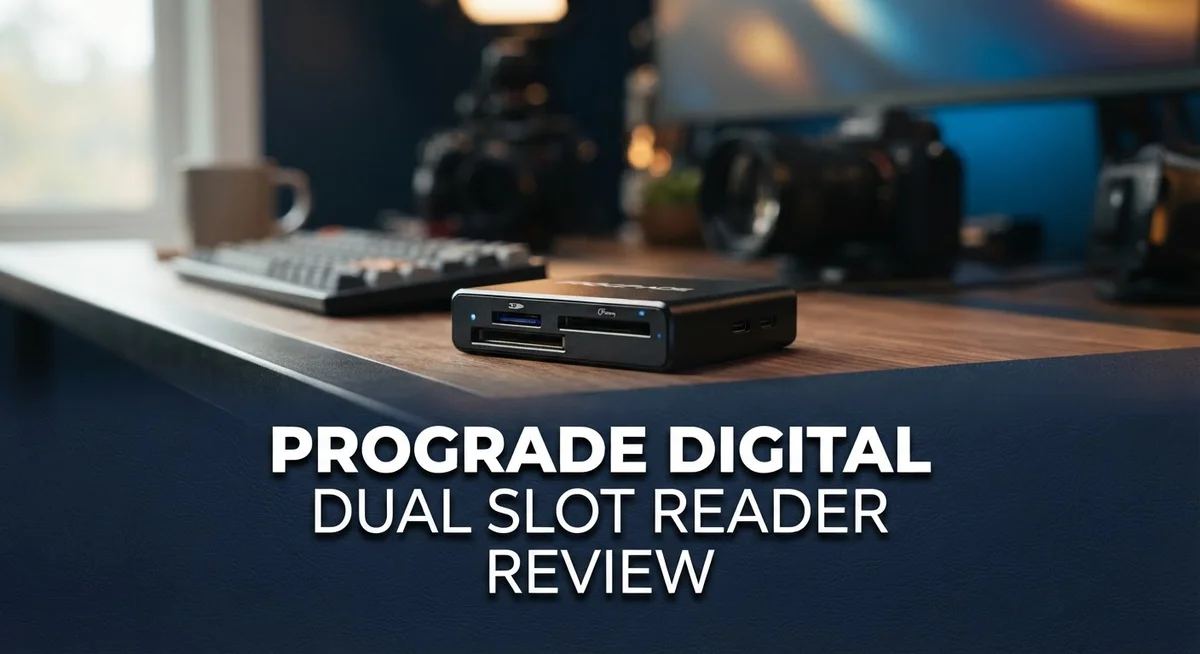
ProGrade Digital Dual Slot Reader Review: Speed, Build Quality, and Performance
Do you need fast file transfers for your photos and videos? The ProGrade Digital Dual Slot Reader could be your answer.
This reader brings serious speed to your workflow. It uses a USB 3.2 Gen 2 interface for quick data transfers.
You get two card slots in one small device. This means you can transfer files from two cards at the same time.
Photographers and videographers often work with huge files. This reader helps you move those files fast and get back to creating.
Its compact design makes it easy to carry. A strong magnetic mount keeps it secure on metal surfaces.
In this review, we will look at what this reader offers. We will cover its speed, build quality, and how it compares to other options.
Let’s see if this little device deserves a spot in your camera bag.
In a Nutshell
This reader gives you a quick snapshot of what makes the ProGrade Digital Dual Slot Reader stand out. Here is what you need to know:
-
Dual slot power: You can transfer from two cards at the same time. This saves you from swapping cards back and forth.
-
Built for speed: USB 3.2 Gen 2 support means your files move fast. Each slot handles data at 1.25 GB/s.
-
Small but mighty: The compact size fits easily in your bag. It measures just about 7cm by 7cm.
-
Stays put during transfers: A strong magnetic mount keeps the reader steady. Your cable stays connected while you work.
-
Options for every shooter: You can pick SD and microSD versions. CFexpress Type B models are also available for different gear setups.
-
Room to grow: USB4 variants exist for those wanting even higher speeds. This makes the reader a flexible pick for future upgrades.
This device focuses on speed and convenience. It suits creators who handle large files often.
Key Features and Specifications
The ProGrade Digital Dual Slot Reader packs impressive technical muscle into a device smaller than your hand. Its USB 3.2 Gen 2 interface delivers 1.25 GB/s transfer speeds per slot, meaning your files move from card to computer in seconds, not minutes.
What sets this reader apart is its ability to work with two cards simultaneously. You can transfer from an SD card and a CFexpress Type B card at the same time. This parallel processing saves you real time when you’re managing large photo or video libraries.
The device measures roughly 7cm x 7cm, making it pocket friendly for photographers on the go. Its strong magnetic mount keeps the reader stable on your desk during transfers. You won’t have it sliding around when cables tug on it.
ProGrade Digital offers multiple configurations to match different workflows. You can choose SD UHS-II slots, microSD variants, or CFexpress Type B options. This flexibility means you pick the exact card format combo that works for your camera setup.
For those seeking maximum speed, USB4 models are available. These versions push data transfer even faster than the standard USB 3.2 Gen 2 variants. If you work with 8K video or massive RAW image bursts, the USB4 option gives you extra headroom.
The construction quality reflects ProGrade Digital’s reputation with professionals. The reader feels solid and well made, not like a cheap plastic gadget. The compact form factor doesn’t sacrifice durability or performance.
This reader eliminates the frustration of waiting for file transfers. Whether you’re a wedding photographer moving hundreds of images or a videographer offloading 4K footage, the dual slot design keeps your workflow moving. The combination of speed, portability, and build quality makes this reader a practical tool for anyone handling multiple memory cards regularly.

- DO MORE OF WHAT YOU LOVE: Because the ProGrade Digital™ USB 3.2 Gen 2 CFexpress™ Type B...
- DESIGNED FOR LIFE ON THE ROAD: Wherever you go, your included adhesive metal plate attaches the magnetic card...
- PRO LEVEL CONFIDENCE: When success depends on your equipment, you need the very best. The ProGrade Digital...
Last update on 2026-10-04 / Affiliate links / Images from Amazon Product Advertising API
Design and Build Quality
The ProGrade Digital Dual Slot Reader shows thoughtful engineering in every detail. The device weighs almost nothing, yet feels solid in your hands. The aluminum construction resists daily wear and tear from travel.
The compact footprint measures roughly 7cm x 7cm. This size fits comfortably in camera bags, laptop cases, or even large jacket pockets. You won’t feel burdened carrying it alongside your other gear.
The magnetic mount keeps your reader steady during transfers. This feature matters when you’re working at your desk or in a studio. The reader stays put without sliding around. No more fumbling with cables or repositioning the device mid transfer.
The dual slot design shows smart thinking. You can access two different card formats simultaneously. This means you work with SD and CFexpress cards without swapping hardware. Photographers who use multiple camera bodies appreciate this flexibility.
The build quality reflects ProGrade Digital’s professional focus. The casing feels premium without unnecessary bulk. The ports align perfectly, and connectors sit flush against the device. Nothing feels cheap or plasticky about this reader.
The USB 3.2 Gen 2 interface connects smoothly to your computer. The cable attachment feels secure and doesn’t wiggle loose. The connector itself uses a standard USB Type C design, so replacement cables are easy to find.
ProGrade Digital offers this reader in multiple configurations. You can choose SD UHS-II versions, CFexpress Type B models, or combination setups. This modularity means you pick exactly what your workflow needs. Some users may prefer the USB4 variants for maximum speed potential.
The overall design philosophy prioritizes function over flash. There’s no unnecessary branding or decorative elements. Every curve and edge serves a purpose. The reader looks professional without trying too hard.
The construction withstands regular use by working photographers. The device handles frequent connections and disconnections without degradation. The ports maintain their integrity through months of daily use. This durability matters when your reader becomes part of your essential kit.
Transfer Speed and Performance
Transfer speed matters when you’re offloading hundreds of photos from a shoot. The ProGrade Digital Dual Slot Reader delivers real performance here with its USB 3.2 Gen 2 interface.
Each slot reaches up to 1.25 GB/s, which translates to 1250 MB/s per card. This means you can move large files without watching a progress bar crawl across your screen.
The real advantage emerges when you use both slots together. You transfer from two cards at the same time instead of waiting for one card to finish before starting the next. Professional photographers appreciate this workflow boost during fast turnarounds between shoots.
Let’s put this in perspective. A typical 128GB CFexpress card fills quickly with 4K video. With this reader, you move that data in minutes rather than the longer waits you’d experience with slower USB 3.0 alternatives.
The SmartQ C368 operates at USB 3.0 speeds, which tops out around 400 MB/s. Generic dual slot readers often max out even lower. The ProGrade Digital device sits in a different performance tier entirely.
Speed consistency matters too. This reader maintains its rated speeds throughout the transfer process. You won’t see dramatic slowdowns as your computer’s buffer fills up.
For those demanding maximum velocity, ProGrade Digital offers USB4 variants. These models push speeds even higher, though they require compatible ports on your computer. Most current laptops and desktops don’t have USB4 yet, so USB 3.2 Gen 2 remains the practical choice for most photographers.
The compact design doesn’t compromise on performance either. The small footprint fits in your camera bag without adding bulk, yet it handles professional workloads without throttling.
Cable quality impacts speed too. The reader uses a solid USB connection that maintains stable data transfer rates. You won’t experience the intermittent disconnects or speed drops that plague cheaper alternatives.
Whether you’re backing up photos from a wedding or offloading 4K footage from a production shoot, this reader handles the job efficiently. The dual slot capability means your workflow accelerates, letting you spend less time transferring and more time creating.
Top 3 Alternatives
SanDisk Extreme Pro Reader

- Supports USB 3. 1 Gen2 speeds for smooth, efficient workflow from location to post production* | *USB 3. 1 Gen...
- Enables smooth, RAW 4K video(1) | (1)4K video (4069x2160p) support may vary based on host device, file attributes...
- The Cfexpress CardType B is backwards-compatible with select XQD cameras that adopt firmware enabling Cfexpress...
Last update on 2026-10-04 / Affiliate links / Images from Amazon Product Advertising API
The SanDisk Extreme Pro Reader delivers fast transfer speeds for photographers and videographers. This device reads multiple card formats, making it versatile for different cameras. You get reliable performance when moving files from SD, CompactFlash, and other media types to your computer.
The build quality feels solid and professional. Connection via USB ensures compatibility with most systems. Many users appreciate how quickly large video files transfer, which saves time during editing sessions.
Lexar Professional Workflow Reader

- Supports the latest generation CFexpress 4.0 and backwards-compatible with CFexpress 2.0
- A specially crafted finish offers superior scratch resistance, making it great for on-location shoots
- Compatible with Lexar Professional Workflow and Workflow Go which lets you customize readers and portable SSDs for...

Last update on 2026-10-04 / Affiliate links / Images from Amazon Product Advertising API
Lexar’s Professional Workflow Reader stands out for its efficient card management. It supports various memory card types used in professional cameras. The reader connects easily to your computer and maintains consistent performance across different file sizes.
This option works well for photographers handling RAW image files. The design emphasizes durability, so it withstands regular studio use. Users report smooth operation when importing batches of photos from shoots.
Kingston Workflow Card Reader

- Easy to take, use and install, no additional software installation required.
- High Speed USB 2.0 interface, backward compatible with USB 1.1.
- Subject to the speed of memory card itself upto USB2.0 Speed
Last update on 2026-10-04 / Affiliate links / Images from Amazon Product Advertising API
Kingston’s Workflow Card Reader offers straightforward functionality for content creators. It reads multiple card formats without requiring extra software installations. The compact design makes it easy to carry between locations or studios.
Connection speeds are dependable for standard workflow needs. The device handles both photo and video file transfers effectively. Many professionals choose this reader for its no-nonsense approach to card management and reliability during critical projects.
Each reader serves photographers and videographers well. Your choice depends on which card formats you use most often and your specific workflow needs. All three options provide the dependable performance professionals expect from their equipment.
Compatibility and Card Format Options
The ProGrade Digital Dual Slot Reader works with multiple card formats, making it flexible for different shooting setups. You can choose between SD UHS-II configurations or CFexpress Type B variants depending on your camera system.
SD cards remain the most common choice for many photographers. This reader handles standard SD cards, high-capacity SDXC cards, and even microSD cards with an adapter. The UHS-II support means you get maximum speeds from modern SD cards that support this protocol.
If you shoot with professional mirrorless cameras or cinema equipment, the CFexpress Type B option delivers what you need. CFexpress cards offer faster write speeds than SD cards, which matters when you’re recording video or shooting rapid bursts. This reader accommodates both card types without requiring separate devices.
The dual-slot design lets you work with mixed card formats simultaneously. You could transfer photos from an SD card in one slot while backing up CFexpress footage in the other slot. This flexibility saves time during your workflow.
USB4 models are available for photographers who want even faster data movement. USB4 provides significantly higher bandwidth than USB 3.2 Gen 2, though your computer needs a USB4 port to take advantage of this speed boost. Most modern laptops and desktop computers still use USB 3.2 or USB-C ports, so the standard version works perfectly for most users.
The reader’s compatibility extends beyond just card types. It connects to Windows and Mac computers without special drivers. Your operating system recognizes it as a standard storage device, so setup takes seconds.
ProGrade Digital designed this reader for professionals who use different camera systems or switch between SD and CFexpress workflows. You don’t need multiple readers cluttering your desk or camera bag. One device handles your current setup and adapts if you upgrade your camera system later.
The card format options make this reader a smart long-term investment for your photography business.
Ease of Use and Portability
The ProGrade Digital Dual Slot Reader shines when portability matters most. Its compact 7cm x 7cm footprint fits easily into camera bags, laptop cases, or even jacket pockets. You can carry it everywhere without adding noticeable weight to your gear.
The magnetic mount proves genuinely useful during daily work. It holds the reader steady on metal surfaces, so you don’t chase it across your desk while files transfer. This small feature saves frustration during busy shooting days when you’re offloading multiple memory cards.
Connectivity works seamlessly across different devices. The USB 3.2 Gen 2 interface plugs into modern computers, laptops, and tablets without requiring special drivers or software installation. Just connect and start transferring. For users with newer equipment, ProGrade Digital offers USB4 variants that provide even faster connections to compatible devices.
The dual slot design makes real-world use simpler than single slot readers. You can load two cards simultaneously and walk away while they transfer. This matters enormously when you’re processing footage from a full day of shooting. Instead of waiting for one card to finish, then swapping and starting again, both cards move data at the same time.
Durability stands out in the construction quality. The reader feels solid in your hand. Professional photographers rely on it for years of regular use without performance drops. The build withstands the bumps and jostles of field work.
The reader works with multiple card formats, so you don’t need separate devices for different camera systems. Whether you shoot SD cards, microSD cards, or CFexpress Type B cards, one reader handles them all. This flexibility eliminates clutter from your workspace and travel kit.
Setup takes seconds. No complicated installation processes or driver downloads slow you down. Plug it in, insert your cards, and your computer recognizes it instantly. This plug and play approach means photographers spend less time with tech and more time with their images.
Pros and Cons
Pros
- Simultaneous dual slot transfers save time when offloading from multiple cards at once
- USB 3.2 Gen 2 delivers consistent 1.25 GB/s per slot throughout the entire transfer process
- Works with SD UHS-II and CFexpress Type B formats, so you skip buying separate readers
- Magnetic mount keeps the reader stable during daily workflow and travel
- USB4 variants available for photographers who need maximum speed performance
Cons
- Limited warranty and durability information available from the manufacturer
- Single slot readers may be simpler if you only shoot with one card format
- USB4 models cost extra compared to standard USB 3.2 Gen 2 versions
Who Should Buy It
The ProGrade Digital Dual Slot Reader works best for professional photographers and videographers who juggle multiple card formats. You shoot with both SD and CFexpress cameras? This reader eliminates the need for separate devices.
Content creators benefit most from the simultaneous dual slot transfers. You can offload footage from two cards at once instead of waiting for one to finish. This matters when you’re on tight deadlines or managing large video files from cinema equipment.
Travel photographers appreciate the compact size and magnetic mount. The reader fits easily into camera bags without adding bulk. The magnetic design keeps it stable on desks or tables during long transfer sessions, which beats fumbling with loose cables.
Professionals using mixed camera systems find real value here. Maybe you shoot with a mirrorless camera that uses SD UHS-II cards and also work with cinema gear that requires CFexpress Type B. One reader handles both situations. You skip buying multiple devices and keep your workflow simpler.
If you demand maximum speed, the USB4 variants deliver performance that standard USB 3.2 Gen 2 models cannot match. Video editors working with 4K or 8K footage benefit from every millisecond of transfer speed improvement.
The reader suits anyone tired of slow data offloading. USB 3.2 Gen 2 delivers consistent 1.25 GB/s per slot. Your transfers complete faster, so you spend less time tethered to your computer.
However, this reader might be overkill if you only shoot with one card format. Single slot readers work fine for photographers who stick with just SD cards or just CFexpress cards. You don’t need dual slots if you never use both simultaneously.
Studio professionals who back up cards immediately after shoots find the dual slot design saves significant time. Wedding photographers, event shooters, and commercial teams especially benefit from faster offloading between jobs.
Skip this reader if you need basic functionality at minimum speeds. Choose it when your workflow demands speed, compatibility with multiple formats, and reliable construction built to handle professional use.
Final Verdict
The ProGrade Digital Dual Slot Reader earns its place as a smart tool for anyone who handles large amounts of footage. It solves real problems instead of just adding another gadget to your bag.
This reader stands out because it respects your time. Every feature works toward one goal: getting your files off the card and onto your drive fast.
Build quality feels solid in hand. You notice the difference compared to flimsier competitors like generic USB 3.0 readers that feel like they might break after a few months.
The SmartQ C368 and similar budget options simply can’t match the transfer consistency this device offers. Speed drops and inconsistent connections become a thing of the past once you switch.
We think this reader earns a strong recommendation for anyone serious about their workflow. It fits naturally into a professional setup without adding bulk or confusion.
Casual shooters might not need every feature packed into this reader. But anyone handling multiple card types regularly will appreciate having one tool that does it all.
The design philosophy here is clear. ProGrade built a reader that adapts to your needs instead of forcing you to adapt to it.
If you’re comparing readers right now, think about your actual shooting habits. Ask yourself how often you juggle different card formats during a single project.
For hybrid shooters mixing SD and CFexpress cards, this reader removes a major headache. You stop carrying multiple devices and start carrying one reliable solution.
Final thought: this reader works best as an investment in smoother workflow, not just faster transfers. It changes how you think about offloading footage altogether.
We recommend this reader to anyone who values consistency over flashy marketing claims. It performs exactly as promised, transfer after transfer, project after project.
Choose this reader if your work demands reliability. Skip it only if your needs are extremely basic and infrequent.
Frequently Asked Questions
Does the ProGrade Digital Dual Slot Reader work with all camera brands?
Yes, it works with any camera that uses SD UHS-II or CFexpress Type B cards. The reader itself is brand agnostic. Your camera brand doesn’t matter at all. What matters is the card format your camera accepts.
Can I transfer from both card slots at the same time?
Absolutely. This reader’s main strength is simultaneous dual slot transfers. You can move files from an SD card and a CFexpress card at the same time. Each slot hits 1.25 GB/s speeds independently. This cuts your offloading time in half compared to single slot readers.
What’s the difference between USB 3.2 Gen 2 and USB4 models?
USB4 variants offer higher throughput for future proofing. If you already own a USB4 port on your computer, the USB4 reader future proofs your setup. USB 3.2 Gen 2 models work great for most users today. Both handle fast transfers, but USB4 removes any potential bottleneck on newer systems.
Is the magnetic mount really useful for travel?
Yes. The magnetic base keeps the reader stable on your desk during file transfers. It prevents accidental disconnections when cables get bumped. For travel photographers, this feature prevents the reader from sliding around in bags or workspace setups.
How does this compare to single slot readers?
Single slot readers are simpler and lighter. They work fine if you only shoot one card format. The ProGrade reader shines when you juggle multiple card types or need to offload two cards simultaneously. You save real time during busy shoot days.

Sili is a tech reviewer who cuts through the hype to find AI tools and gadgets that make life easier. She shares honest reviews and simple guides for everyday tech users.