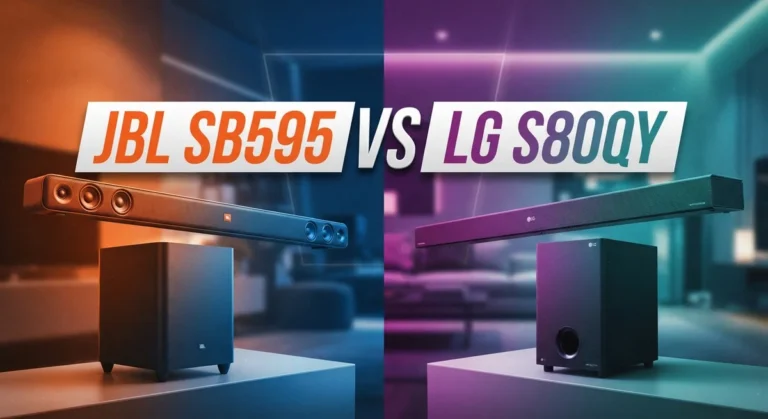

JBL SB595 vs Samsung HW-Q60C: Which Soundbar Delivers Better Atmos Performance?
Picking the right soundbar can feel tricky. Two strong options stand out today: the JBL SB595 and the Samsung HW-Q60C.
Both promise to boost your TV audio. But they take different paths to get there.
The JBL SB595 brings true Dolby Atmos with a 3.1.2 channel setup. It focuses on immersive, room filling sound for movie nights.
The Samsung HW-Q60C counters with DTS support and a handy graphic EQ. It gives you more control over your sound profile.
So which soundbar fits your home better? This guide breaks down specs, strengths, and weaknesses side by side.
We will compare channel configuration, format support, and overall sound quality. By the end, you will know exactly which pick suits your viewing habits.
Whether you want deep immersive audio or flexible customization, we have you covered. Let’s dive into the details and find your ideal match.
Quick Comparison: JBL SB595 vs Samsung HW-Q60C
| Feature | JBL SB595 | Samsung HW-Q60C |
|---|---|---|
| Channel Configuration | 3.1.2 channels | 3.1 channels |
| Power Output | 440W | Not specified |
| Subwoofer | 6.5″ wireless subwoofer | Wireless subwoofer |
| Audio Format Support | True Dolby Atmos only | Dolby Atmos + DTS |
| Sound Customization | Balanced warm sound | Graphic EQ with presets |
| Connectivity | Standard connectivity | Bluetooth connectivity |
| Height/Surround Handling | Dedicated height channels | Downmixes height/surround |
| Best For | Immersive surround enthusiasts | Budget-conscious customization seekers |
JBL SB595 Review

- Panoramic Surround Sound: Four up-firing speakers in the soundbar and wireless rear speakers deliver panoramic...
- MultiBeam 3.0: The sound beams perfectly fill your room, delivering the most immersive, lifelike, and realistic...
- 48Gbps Data Rate: Transfers up to 10K Ultra HD video, including 8K/60 and 4K/120 | Solid Long Grain Copper...
Last update on 2026-08-31 / Affiliate links / Images from Amazon Product Advertising API
The JBL SB595 is a premium 3.1.2 channel soundbar that brings genuine Dolby Atmos immersion to your living room. It suits home theater fans who want authentic 3D surround sound without compromise.
This system packs 440 watts of power and includes a 6.5-inch wireless subwoofer that delivers punchy bass. The dedicated center channel keeps dialogue crisp and clear during movies and shows.
Build quality feels solid throughout, with a sleek design that fits most TV setups. The wireless subwoofer connects seamlessly, so you skip messy cable runs behind furniture.
Real-world performance shines during action sequences and atmospheric scenes. Height channels create genuine overhead effects that pull you into the story, while the warm, balanced sound signature keeps everything sounding natural.
Pros
- True Dolby Atmos with height channels for immersive 3D audio
- Powerful 440W output handles loud action scenes with ease
- Balanced warm sound profile works well for movies and music
- Wireless 6.5″ subwoofer delivers solid low-end impact
Cons
- No DTS audio format support limits compatibility with some content
- Requires more space due to the larger subwoofer unit
Samsung HW-Q60C Review

- 1️⃣ IMMERSIVE 3.1.2CH DOLBY ATMOS AUDIO The Samsung Q-Series 3.1.2ch Soundbar delivers cinematic Dolby Atmos...
- 2️⃣ WIRELESS SUBWOOFER FOR CINEMATIC BASS Enjoy deeper and richer bass with the included wireless subwoofer...
- 3️⃣ SPACEFIT SOUND PRO OPTIMIZATION SpaceFit Sound Pro automatically calibrates audio based on your room...
Last update on 2026-08-31 / Affiliate links / Images from Amazon Product Advertising API
The Samsung HW-Q60C is a 3.1 channel soundbar built for viewers who want easy sound control without extra complexity. This system includes a wireless subwoofer and works well for everyday TV watching and streaming content.
What makes this soundbar stand out is its graphic EQ with presets. You can tweak the sound to match your room and personal taste, whether you prefer punchy dialogue or deeper bass.
The build feels solid and compact, fitting neatly under most TV sizes. Real-world performance shows it gets loud enough for action scenes and handles both Dolby Atmos and DTS formats.
Bluetooth connectivity keeps setup simple, and the wireless subwoofer adds flexibility to your room layout. This soundbar works best if you value customization and format flexibility over immersive height channels.
Pros
- Supports both Dolby Atmos and DTS for wider content compatibility
- Graphic EQ with presets lets you shape the sound to your preference
- Wireless subwoofer and Bluetooth connectivity for easy setup
- Gets loud enough for dynamic action sequences
Cons
- Lacks height channels, so Atmos effects feel less immersive than true 3.1.2 systems
- Low-bass depth doesn’t match larger subwoofers in premium soundbars
- Limited wireless functionality compared to some competitors
Head to Head: Key Differences
The JBL SB595 and Samsung HW-Q60C differ most in how they handle immersive audio experiences. JBL adds height channels (3.1.2 setup) that Samsung lacks, making Dolby Atmos feel genuinely three-dimensional in your room.
Samsung’s real advantage lies in format flexibility. It supports both Dolby Atmos and DTS, while JBL only handles Atmos, limiting your options with certain streaming services and physical media.
Sound character separates these two soundbars clearly. The JBL delivers a warm, balanced tone that feels natural across movies and music, while Samsung prioritizes customization through its graphic EQ with presets for listeners who want hands-on control.
Power output matters for different viewing habits. JBL’s 440 watts handles explosive action sequences effortlessly, whereas Samsung gets loud but lacks the same low-bass depth during intense scenes.
Subwoofer performance shows another split. The JBL includes a larger 6.5-inch wireless subwoofer that punches harder in the low end, giving you that visceral rumble during dramatic moments.
Samsung’s subwoofer works well but doesn’t dig as deep into bass frequencies.
Wireless functionality reveals practical differences too. Samsung emphasizes Bluetooth connectivity for streaming flexibility, while JBL focuses on dedicated Atmos processing through its wired connections for cleaner audio delivery.
Room placement becomes easier with Samsung’s compact design and simpler connectivity options. JBL demands more consideration for speaker positioning to maximize its height channel benefits.
Your choice depends on priorities. Pick JBL if you want premium immersive audio with serious bass impact.
Choose Samsung if you prefer customizable sound with broader format support and simpler wireless options.
Which One Should You Buy
The JBL SB595 stands out as the overall winner in this comparison. Its true 3.1.2 channel setup gives you genuine height separation for immersive Dolby Atmos sound.
This setup pairs with powerful output and a balanced sound signature. It simply outperforms the Samsung’s downmixed surround method.
The Samsung HW-Q60C still holds value for a different type of buyer. It focuses on customization and format support rather than true height audio.
Best for each buyer
-
JBL SB595: This soundbar suits home theater enthusiasts. They want authentic, immersive 3D surround sound with true height channel separation.
-
Samsung HW-Q60C: This soundbar suits everyday TV viewers. They want customizable sound through a graphic EQ and broad format compatibility, including DTS.
Frequently Asked Questions
Which soundbar handles Dolby Atmos better?
The JBL SB595 wins here. It has 3.1.2 channels with dedicated height speakers that create true 3D audio.
The Samsung HW-Q60C uses 3.1 channels and downmixes height content instead of playing it separately.
This means Atmos movies sound more immersive on the JBL. You hear overhead effects clearly.
The Samsung still supports Atmos, but it can’t deliver the same spatial experience.
Does the Samsung support more audio formats?
Yes. The Samsung HW-Q60C supports both Dolby Atmos and DTS.
The JBL SB595 supports Dolby Atmos but lacks DTS compatibility.
If you watch content with DTS soundtracks, the Samsung handles it natively. The JBL won’t decode DTS tracks properly.
This matters if you use streaming services or physical media that include DTS audio.
Which subwoofer goes deeper?
The JBL SB595 delivers stronger bass impact. Its 6.5 inch wireless subwoofer produces more low end depth and power.
The Samsung’s subwoofer works well for general TV watching. It gets loud enough for action scenes.
However, it doesn’t dig as deep into bass frequencies compared to the JBL model.
Can I customize the sound on either?
The Samsung HW-Q60C offers graphic EQ with presets. You adjust bass, treble, and other frequencies to match your taste.
The JBL SB595 focuses on a fixed balanced warm sound profile. You get less hands on control but a consistent listening experience designed for movies and music.
Which fits easier in my room?
The Samsung HW-Q60C sits more compact under most TVs. Its simpler wireless setup means fewer cables to manage.
The JBL SB595 is larger due to its extra height channels. Both use wireless subwoofers, so room placement stays flexible either way.

Sili is a tech reviewer who cuts through the hype to find AI tools and gadgets that make life easier. She shares honest reviews and simple guides for everyday tech users.