Sony BRAVIA 2 II vs Sony QLED: Which TV Has Better Picture Quality & Features?
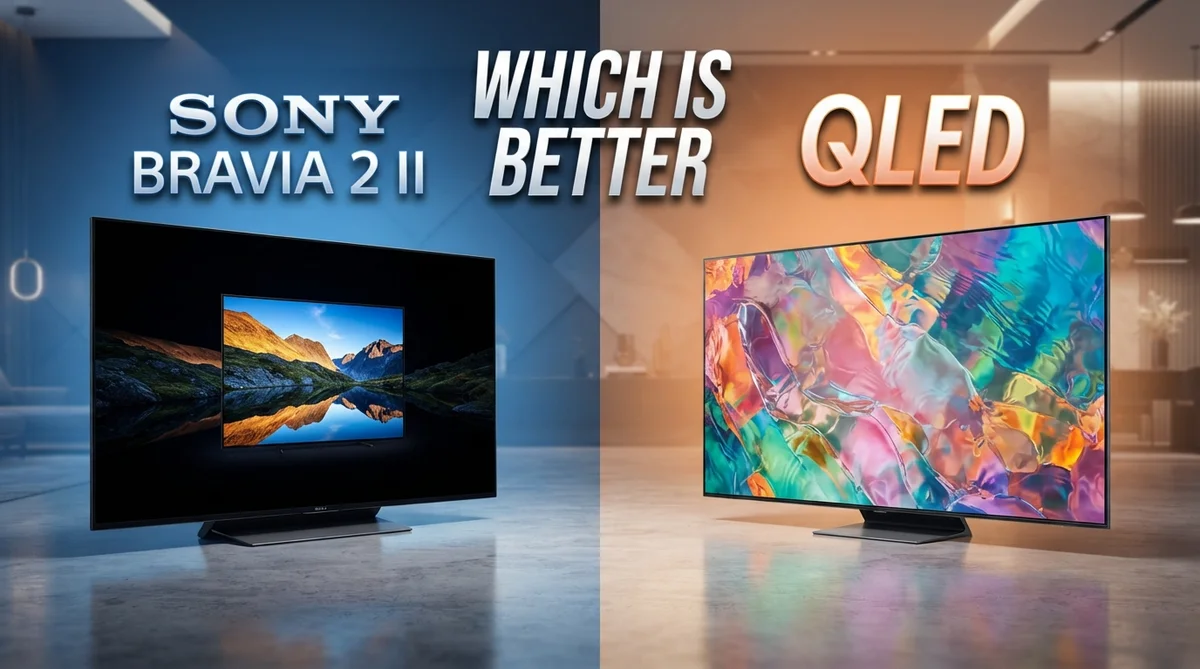
Choosing a new TV feels exciting but tricky. Sony gives you two strong options here. The Sony BRAVIA 2 II and Sony QLED both promise great pictures.
But they take different paths to get there. One leans on smart software.
The other leans on advanced backlight tech.
The BRAVIA 2 II uses direct-lit LED and runs on Google TV. It offers a flexible, customizable experience for everyday viewing.
The QLED models step things up with Mini LED backlighting. This brings deeper blacks and brighter, more vibrant colors, especially in sunlit rooms.
So which one fits your living room? This guide breaks down specs, strengths, and weaknesses side by side.
We will help you spot the real differences that matter. By the end, you will know exactly which Sony TV suits your viewing habits best.
Quick Comparison: SONY Bravia 2 Ii vs SONY Qled
| Feature | SONY Bravia 2 Ii | SONY Qled |
|---|---|---|
| Backlight Type | Direct-lit LED | Mini LED |
| Processor | 4K Processor X1 | XR Processor |
| Refresh Rate | 60Hz | Higher, varies by model |
| Smart Platform | Google TV | Google TV |
| Black Levels/Contrast | Inferior, more blooming | Superior, less blooming |
| Peak Brightness | Limited | High |
| Audio Support | Standard support | Dolby Atmos/DTS:X |
| Best Use Case | Budget smart TV features | Bright rooms, HDR content |
SONY Bravia 2 Ii Review

- POWERFUL TV PROCESSING: The 4K Processor X1 delivers a lifelike picture that is full of rich colors and sharp...
- ENHANCED COLOR AND FINE DETAILS: See natural and precise picture quality with a wide array of colors and dynamic...
- EVERYTHING YOU STREAM. ALL IN ONE SCREEN: Get access to all your favorite streaming apps in one place with Google...

Last update on 2026-09-14 / Affiliate links / Images from Amazon Product Advertising API
The Sony BRAVIA 2 II is a 65-inch 4K UHD television that brings Google TV integration straight to your living room. It suits viewers who want a dependable display without sacrificing software flexibility.
This model runs on a direct-lit LED backlight and includes the 4K Processor X1 for upscaling content. You also get Wi-Fi 6 and Bluetooth 5.3, making wireless connectivity smooth and fast.
Build quality feels solid throughout. The TV handles everyday streaming, sports, and movies with consistent performance that meets expectations for this category.
Real-world viewing shows competitive image quality for general use. Black levels stay decent, though direct-lit LED does produce some blooming in high-contrast scenes like dark movies with bright text overlays.
Pros
- Google TV OS is highly customizable and responsive
- Wi-Fi 6 and Bluetooth 5.3 ensure strong wireless performance
- Solid build quality feels durable and reliable
- 4K Processor X1 upscales lower-resolution content effectively
Cons
- Direct-lit LED produces inferior black levels compared to Mini LED
- Limited peak brightness in very bright rooms
- Blooming artifacts appear in high-contrast scenes
SONY Qled Review

- MINI LED BRIGHTNESS AND CONTRAST: Thousands of Mini LEDs are precisely controlled by XR Backlight Master Drive to...
- BILLIONS OF REAL-WORLD QLED COLORS: Access billions of accurate real-world colors with QLED technology and XR...
- POWERFUL TV PROCESSING: XR Processor intelligently enhances every scene in real-time boosting color, contrast, and...
Last update on 2026-09-14 / Affiliate links / Images from Amazon Product Advertising API
The Sony QLED (BRAVIA 7/9 series) steps up the display game with Mini LED backlighting that crushes the competition in contrast and black levels. This TV works best in bright rooms where HDR content truly shines.
The Mini LED backlight system delivers superior peak brightness and vibrant colors compared to entry-level direct-lit models. You get exceptional HDR performance that makes movies and games pop, especially in well-lit spaces.
Build quality remains solid throughout, with the XR Processor handling upscaling and motion smoothly. Google TV integration gives you full customization of your home screen and app access.
Real-world viewing shows this TV excels with high-contrast scenes and bright content. The Dolby Atmos and DTS:X support adds immersive audio to match the visual experience.
Pros
- Mini LED backlight produces superior black levels and contrast versus direct-lit LED
- High peak brightness makes HDR content look stunning in bright environments
- Excellent color vibrancy and detail in high-contrast scenes
- Google TV OS remains customizable and responsive
Cons
- Black levels still cannot match true OLED displays
- Potential blooming may occur in extreme high-contrast situations
- Carries a higher price point than entry-level LED models
Head to Head: Key Differences
The BRAVIA 2 II and QLED take fundamentally different approaches to picture quality. BRAVIA 2 II uses direct-lit LED backlighting, while QLED models rely on Mini LED technology for superior control over brightness zones.
Black levels reveal the biggest gap between these two. QLED’s Mini LED system produces noticeably deeper blacks and better contrast separation. BRAVIA 2 II’s direct-lit design illuminates the entire screen uniformly, which means blacks appear grayer in darker scenes.
Brightness performance favors QLED significantly. If your room gets lots of natural light, QLED delivers peak brightness that cuts through glare and keeps HDR content looking vibrant. BRAVIA 2 II handles moderate lighting well but struggles in very bright spaces.
High contrast scenes show where Mini LED truly shines. QLED minimizes blooming artifacts when bright objects sit against dark backgrounds.
BRAVIA 2 II can exhibit some blooming in these exact situations due to its simpler backlight structure.
Google TV runs on both models identically. Customization, app selection, and interface feel the same. Neither TV offers an OS advantage here.
Both include solid processors for upscaling lower resolution content smoothly.
Motion handling performs similarly on each TV. Both manage sports and action scenes without excessive blur or stuttering during regular viewing.
Real world usage depends on your room and content. Choose BRAVIA 2 II if you watch in moderate lighting and prioritize software flexibility. Pick QLED if you sit in bright rooms, watch lots of HDR films, or demand superior contrast and black depth.
The core difference is simple: QLED trades direct-lit simplicity for Mini LED’s advanced backlight control and image refinement.
Which One Should You Buy
The Sony QLED comes out on top overall. Its Mini LED backlight gives you deeper black levels and stronger peak brightness than the BRAVIA 2 II’s direct-lit panel.
This makes a real difference for HDR content and bright room viewing. Colors pop more and contrast feels sharper on screen.
The BRAVIA 2 II still holds its own for everyday use. It just does not match the QLED’s premium picture performance.
Best for each buyer
-
SONY Bravia 2 Ii: This suits buyers who want smart TV features and Google TV flexibility. It works well for solid everyday performance without needing top-tier contrast.
-
SONY Qled: This suits users in bright rooms who want enhanced HDR performance. It delivers vibrant colors and superior contrast compared to standard LED TVs.
Frequently Asked Questions
Which TV handles bright rooms better?
The Sony QLED wins in bright environments. Its Mini LED backlight produces significantly higher peak brightness, making HDR content pop even with sunlight streaming through windows.
The BRAVIA 2 II’s direct-lit LED can’t match this output, so colors may appear washed out in well-lit spaces.
Does the BRAVIA 2 II have any picture quality advantages?
Not really for image quality itself. The QLED’s Mini LED system dominates contrast and black levels.
However, the BRAVIA 2 II shines in software flexibility. You get more customization options within Google TV, and the interface feels slightly more responsive on this model.
What causes blooming, and which TV has this problem?
Blooming happens when bright objects appear with halos around them during dark scenes. The BRAVIA 2 II exhibits this more noticeably due to its simpler backlight structure.
The QLED’s Mini LED system reduces blooming significantly, delivering cleaner high-contrast scenes overall.
Which processor is better for upscaling?
Both TVs handle upscaling well. The QLED uses the XR Processor, which is slightly more advanced than the BRAVIA 2 II’s 4K Processor X1.
In real-world viewing, the difference feels minimal for everyday content. You’ll notice better motion handling and detail enhancement with the QLED, but not a dramatic gap.
Should I choose based on my room type?
Yes. Pick the QLED for bright rooms and HDR enthusiasts who want superior contrast.
Choose the BRAVIA 2 II if you spend more time in dimly lit spaces and value Google TV customization over peak image performance. Both deliver solid everyday viewing.

Sili is a tech reviewer who cuts through the hype to find AI tools and gadgets that make life easier. She shares honest reviews and simple guides for everyday tech users.