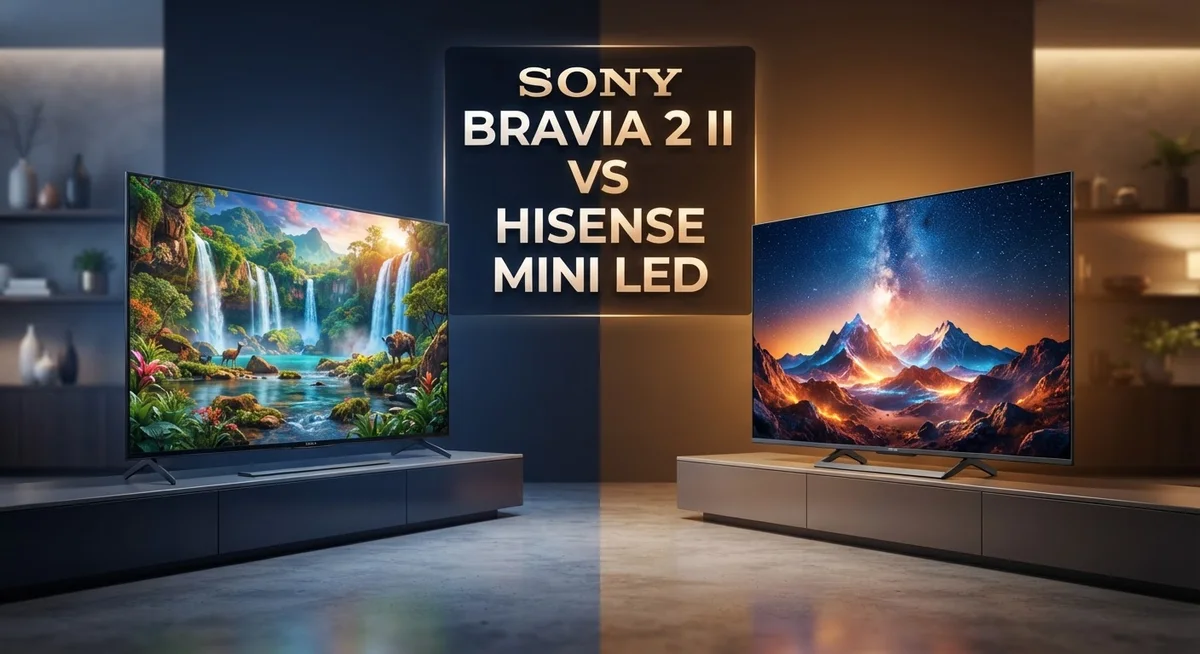
Sony BRAVIA 2 II vs Hisense Mini LED: Picture Quality Analysis
Picking a new TV can feel tricky. Two strong options stand out today: the Sony Bravia 2 II and the Hisense Mini LED.
Both promise stunning 4K visuals, but they take very different paths to get there.
The Sony Bravia 2 II focuses on picture processing and detail. It uses direct lit LED technology and smart upscaling to make older content look sharp.
Wide viewing angles make it great for group watching.
The Hisense Mini LED takes a bolder approach. It packs serious brightness, deep contrast, and a 165Hz refresh rate for smooth gaming.
Quantum dot color and Dolby Vision support add extra punch to HDR content.
So which one fits your space better? This guide breaks down specs, strengths, and weaknesses side by side.
By the end, you will know exactly which TV matches your viewing habits and room setup.
Quick Comparison: SONY Bravia 2 Ii vs Hisense Mini Led
| Feature | SONY Bravia 2 Ii | Hisense Mini Led |
|---|---|---|
| Screen Size | 65″ | 55″/65″ options |
| Backlight Technology | Direct-lit LED | Mini-LED Pro |
| Peak Brightness | Limited/insufficient | 3,000–5,000 nits |
| Refresh Rate | 60Hz | 165Hz Game Mode |
| Color Technology | 4K Processor X1 upscaling | QLED quantum dot |
| HDR Support | Standard HDR | Dolby Vision |
| Viewing Angles | Wide viewing angles | Narrower viewing angles |
| Smart Platform | Google TV, Wi-Fi 6 | Google TV |
SONY Bravia 2 Ii Review

- Sony Bravia XR 85 inch X90L 4K HDR Full Array LED Smart TV 2023
- LIFELIKE PICTURE– The intelligent and powerful Cognitive Processor XR delivers a picture with wide dynamic...
- FULL ARRAY LED CONTRAST AND COLOR– See enhanced contrast with high peak brightness and billions of accurate...
Last update on 2026-09-14 / Affiliate links / Images from Amazon Product Advertising API
The Sony BRAVIA 2 II is a 65-inch 4K Direct-lit LED TV built for viewers who prioritize sharp detail and smooth upscaling. It shines in group viewing situations because of its wide viewing angles and consistent picture quality from any seat in the room.
This model features Google TV built-in, Wi-Fi 6, and Bluetooth 5.3 for seamless streaming and device connection. The 4K Processor X1 handles low-quality content exceptionally well, smoothing out rough edges without losing sharpness.
Sony’s Direct-lit LED backlighting keeps the design slim and reliable, with proven build quality you can count on. The TV delivers crisp detail reproduction across movies, sports, and everyday content.
The main trade-off is brightness—this TV works best in rooms with controlled lighting rather than bright, sunny spaces. Peak brightness remains modest compared to Mini-LED competitors.
Pros
- Excellent upscaling makes older content look sharper and cleaner
- Wide viewing angles keep picture quality consistent across the room
- Strong low-quality content smoothing without sacrificing detail
- Proven Sony reliability and established support network
Cons
- Limited peak brightness for bright rooms or intense HDR scenes
- Direct-lit LED cannot match Mini-LED contrast control
- 60Hz refresh rate (not ideal for fast-action gaming)
Hisense Mini Led Review

- HI - QLED MINILED: Striking contrast and vivid, lifelike color put every scene in a new light. Whether it's a sunny...
- NATIVE 144HZ REFRESH RATE: Fast breaks, high-speed chases, live finales — every frame stays crisp and fluid, so...
- BUILT-IN SUBWOOFER: Immersive deep bass from the built-in subwoofer pulls you into the heart of the moment, from...

Last update on 2026-09-14 / Affiliate links / Images from Amazon Product Advertising API
The Hisense Mini LED is a powerhouse for bright rooms and gaming. Available in 55″ and 65″ sizes, this 4K TV packs Mini-LED Pro backlighting that delivers 3,000–5,000 nits of peak brightness—far exceeding most competitors.
This model shines with quantum dot color technology and Dolby Vision support, making HDR content pop with dramatic shadow and highlight control. The 165Hz Game Mode refresh rate keeps fast-action gameplay smooth and responsive, while Google TV provides instant access to your favorite apps.
Build quality shows mixed results. The TV feels solid in hand, but long-term durability reports raise some concerns.
USA support and repair accessibility remain limited compared to major Sony or LG networks.
Real-world performance excels in high-contrast scenarios and bright spaces. The Mini-LED backlighting creates exceptional contrast and color depth.
Trade-offs include narrower viewing angles and occasional blooming artifacts in dark scenes—a common Mini-LED characteristic.
Pros
- Exceptional brightness (3,000–5,000 nits) dominates bright rooms and outdoor viewing
- Superior contrast and quantum dot color deliver stunning HDR performance
- 165Hz Gaming Mode provides smooth, responsive gameplay
- Mini-LED backlighting creates dramatic shadow and highlight separation
Cons
- Narrower viewing angles mean picture quality drops at side positions
- Blooming artifacts appear around bright objects on dark backgrounds
- Limited USA support and repair accessibility create long-term service challenges
Head to Head: Key Differences
The Sony BRAVIA 2 II and Hisense Mini LED take fundamentally different approaches to picture quality. Sony prioritizes processing power and viewing consistency, while Hisense focuses on raw brightness and gaming speed.
Brightness and Room Fit
The Hisense Mini LED delivers 3,000 to 5,000 nits of peak brightness, making it ideal for sunny rooms and daytime viewing. Sony’s Direct-lit LED struggles in bright spaces, performing better in controlled lighting environments.
Picture Detail and Angles
Sony’s 4K Processor X1 excels at upscaling older content and sharpening fine details across the screen. The BRAVIA 2 II maintains consistent picture quality when you sit off to the side, thanks to wide viewing angles that the Hisense cannot match.
Gaming and Motion
Hisense delivers 165Hz Game Mode for fast-moving action and competitive gaming. Sony tops out at 60Hz refresh, making it less suitable for gaming enthusiasts who demand smooth motion performance.
Color and Contrast
Hisense’s quantum dot technology produces more vivid colors, especially in HDR content with dramatic shadows and highlights. Sony offers solid color reproduction but without the same intensity or pop.
Build and Support
Sony brings established reliability and widespread USA service networks. Hisense shows mixed build quality, with limited repair accessibility and support concerns in many regions.
The Real Difference
Choose Sony for group viewing, content upscaling, and reliability. Pick Hisense for gaming, bright rooms, and maximum contrast impact.
Your room’s lighting and viewing habits should guide your decision.
Which One Should You Buy
The Hisense Mini LED takes the win here. It delivers brighter highlights, deeper contrast, and a smooth 165Hz refresh rate that gaming fans will love.
Its Mini-LED Pro technology and quantum dot colors make movies and shows pop, especially in bright rooms.
Sony’s Bravia 2 II still shines with its consistent picture quality and trusted build, but Hisense edges ahead for overall versatility.
Best for each buyer
-
Sony Bravia 2 II: Great for group viewing in wide seating setups, watching older or lower-quality content that needs strong upscaling, and buyers who value steady picture quality from any angle.
-
Hisense Mini LED: Perfect for gamers who want high refresh rates, viewers in bright rooms needing powerful HDR, and anyone who wants vivid color with deep contrast for movies and shows.
Frequently Asked Questions
Which TV handles dark rooms better?
The Sony BRAVIA 2 II works better in darker spaces. Its direct-lit LED design keeps blacks consistent across the screen without blooming.
The Hisense Mini LED can show blooming artifacts (bright halos around objects) in dark scenes because of its zone-based backlighting. Sony wins for dark room viewing.
Can I use these TVs for gaming?
The Hisense Mini LED crushes gaming. It offers 165Hz Game Mode for smooth, fast action.
Sony’s 60Hz refresh rate feels slower for competitive games. Hisense dominates for gaming enthusiasts.
Which TV is better for old movies and shows?
Sony’s 4K Processor X1 shines here. It upscales lower-quality content and adds sharpness to older films.
The Hisense focuses on raw brightness and contrast rather than content smoothing. Sony excels at making older media look fresh.
What if my room gets lots of sunlight?
The Hisense Mini LED delivers 3,000 to 5,000 nits of peak brightness. Sunlight won’t wash out the picture.
Sony’s dimmer output struggles in bright rooms. Hisense handles sunny spaces easily.
Which TV has better long-term support?
Sony offers established USA service networks and proven reliability. Hisense has limited USA support and repair accessibility concerns.
Sony provides peace of mind for long-term ownership.

Sili is a tech reviewer who cuts through the hype to find AI tools and gadgets that make life easier. She shares honest reviews and simple guides for everyday tech users.