Golf GPS Watch vs Laser Rangefinder: Which Gives You Better Yardage on the Course?
Every golfer wants to know exactly how far it is to the green before taking a swing on the course. Two popular tools can help with that job, and they work in very different ways on the course.
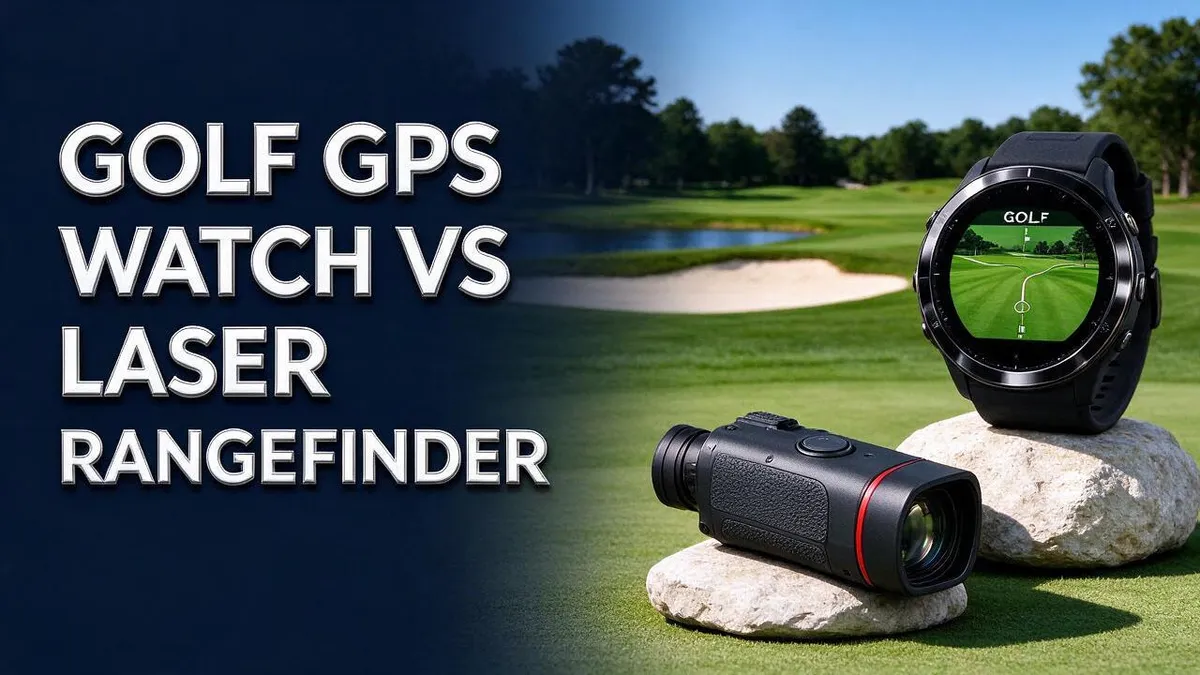
A golf GPS watch sits on your wrist and shows yardage to greens, hazards, and key points on the course. A laser rangefinder is a handheld device that aims at a target and measures the exact distance to it.
Each tool has clear strengths that suit different players and different rounds. The watch gives you fast, convenient numbers for most of your shots, while the rangefinder gives you precise readings for a specific flag, bunker, or other obstacle.
This post will help you pick the right one for your game. We will compare how each tool works, where each one performs best, and which type of golfer should choose each option before you buy anything.
Quick Comparison: Golf GPS Watch vs Laser Rangefinder
| Feature | Golf GPS Watch | Laser Rangefinder |
|---|---|---|
| Form factor | Wrist-worn | Handheld device |
| Distance method | Course-mapped distances | Laser pulse reflection timing |
| Display | AMOLED (e.g., Approach S44) | Not specified in research |
| Exact pin distance | Does not give exact pin distance | Exact distance to chosen target |
| Accuracy at range | Not specified in research | Beam widens with distance |
| Ease of use | Convenient, reviewers rate highly | Requires aiming at each target |
| Best use | Routine yardage to greens and hazards | Precise pin or target distance |
Golf GPS Watch Review

- FAST & CLEAR DISTANCES See front, middle, and back of the green instantly, plus key hazards to plan every shot with...
- 42,000+ COURSES WORLDWIDE Play anywhere with access to over 42,000 preloaded golf courses ready right out of the...
- NO PHONE REQUIRED ON THE COURSE Works independently once the course is loaded—no need to carry your phone while...
Last update on 2026-10-28 / Affiliate links / Images from Amazon Product Advertising API
A golf GPS watch sits on your wrist and shows yardage to greens, hazards, and key course points. It suits most golfers who want quick, hands-free distances on every hole.
Models like the Garmin Approach S44 pair a bright AMOLED display with easy-to-read course data. The Approach S70 offers the full feature set for golfers who want everything.
A wrist-worn design keeps your hands free, so you never dig through your bag for a device. Reviewers rate these watches highly for general use, and the Approach S12 works well for casual rounds.
Real-world performance shines for routine yardage to greens and hazards on most courses. However, the watch does not give the exact distance to the pin, so precise flag shots still need a different tool.
Pros – Convenient, hands-free yardage on every hole – Clear AMOLED display on the Approach S44 – Highly rated by reviewers for general use – Full feature set available with the Approach S70
Cons – No exact distance to the pin – Battery and accuracy specs are hard to confirm – Less precise for targeting a specific obstacle
Laser Rangefinder Review

- [Hunting Range Finder with Mode Memory]-This laser hunting rangefinder has 7 functions: ranging mode,all-in-one...
- [Measure Multiple Targets Continuously]- In continuous scan mode, you can measure multiple targets with one press...
- [High Accuracy and Clear View]-High accuracy 1000 Yards laser range finder with 6.5X magnification. Multilayer...
Last update on 2026-10-28 / Affiliate links / Images from Amazon Product Advertising API
A laser rangefinder is a handheld tool that gives you the exact distance to any target you choose, such as a pin, a bunker edge, or a dogleg corner. It works by sending out laser pulses and timing how long they take to bounce back to the device.
Its biggest strength is pinpoint targeting on one specific spot in front of you. You aim at the flag, then read the exact yardage for that point, which helps you choose the right club with confidence.
Build quality and model specs are not clear from our current research. Check the product sheet for details on battery life, measurement range, and body construction before you choose a model.
In real play, the beam spreads wider as distance grows, which can affect accuracy on long shots. Pick a target that sits well within the device’s range so your reading stays reliable.
Pros – Gives the exact distance to a chosen target – Pinpoints flags, hazards, and obstacles – Helps with precise club selection
Cons – The beam widens with distance – No golf-specific accuracy figures are available – Model specs are hard to confirm
Head to Head: Key Differences
Golfers often ask which tool fits their round best. The answer depends on how you play.
Both tools help you choose clubs, but they work in different ways.
The watch works best for quick, routine checks. You glance down and see yardage to the front, middle, and back of the green.
Models such as the Garmin Approach S44 and the Approach S70 show course data as you walk. They also show hazards like water and sand.
The rangefinder works best when one target matters. Say the pin sits tucked behind a bunker.
You aim at the flag and get the exact number. That precision helps when a few yards change your club choice.
Pace of play also differs. Checking a watch takes a glance, so it fits the flow of a round.
A rangefinder takes a little more time per shot. That extra step can pay off on tight pins.
Think about your typical round. If you play a new course often, a watch helps you learn the layout.
If you chase pins on a familiar course, a rangefinder gives you sharper answers. Many golfers carry both tools.
Keep in mind the gaps. Research does not confirm battery life or accuracy figures for either category.
Check current specs and course databases before you choose. Both tools can improve your game.
Some players use a watch for the full round and a rangefinder for tough shots.
Pick the one that matches your habits. Your scorecard will show the difference.
Which One Should You Buy
The Golf GPS Watch wins this comparison overall. Reviewers rate it highly for general use and everyday play.
It gives quick yardages to greens and hazards on every hole. You never need to aim and shoot on each one.
The laser rangefinder is better for exact pin distance. However, it is a narrower tool that most golfers will use less often.
Best for each buyer
- Golf GPS Watch: Most golfers who want quick yardages to greens and hazards on every hole. The Approach S70 suits those who want the full feature set, and the Approach S12 suits those who want a lower-cost option.
- Laser Rangefinder: Golfers who need precise distance to a specific target, such as the pin or a particular obstacle, and who are willing to aim and shoot for that accuracy.
Frequently Asked Questions
Which tool is better for a beginner?
A watch suits most new players. It shows yardages to greens and hazards without extra steps. You can focus on your swing and learn the course layout as you play.
Can a watch replace a rangefinder completely?
Not always. A watch cannot give the exact distance to a flag you choose. If you often chase tight pins, a rangefinder still helps a lot.
How can I get cleaner readings with a rangefinder?
Aim at a clear target, such as the edge of a flag or the front of a bunker. A solid, easy-to-see object gives a steadier reading. Stand still and take your time before you press the button.
Should I use a watch for practice rounds?
Yes, a watch works well for practice. It helps you play many holes and check distances fast. Save the rangefinder for times when you want to test an exact yardage to a specific spot.
Which should I choose if I play only a few rounds a year?
Pick the watch for simple, everyday use. It needs no aiming and no extra steps between shots. Choose the rangefinder only if exact pin distance matters more to you than convenience.

Sili is a tech reviewer who cuts through the hype to find AI tools and gadgets that make life easier. She shares honest reviews and simple guides for everyday tech users.