
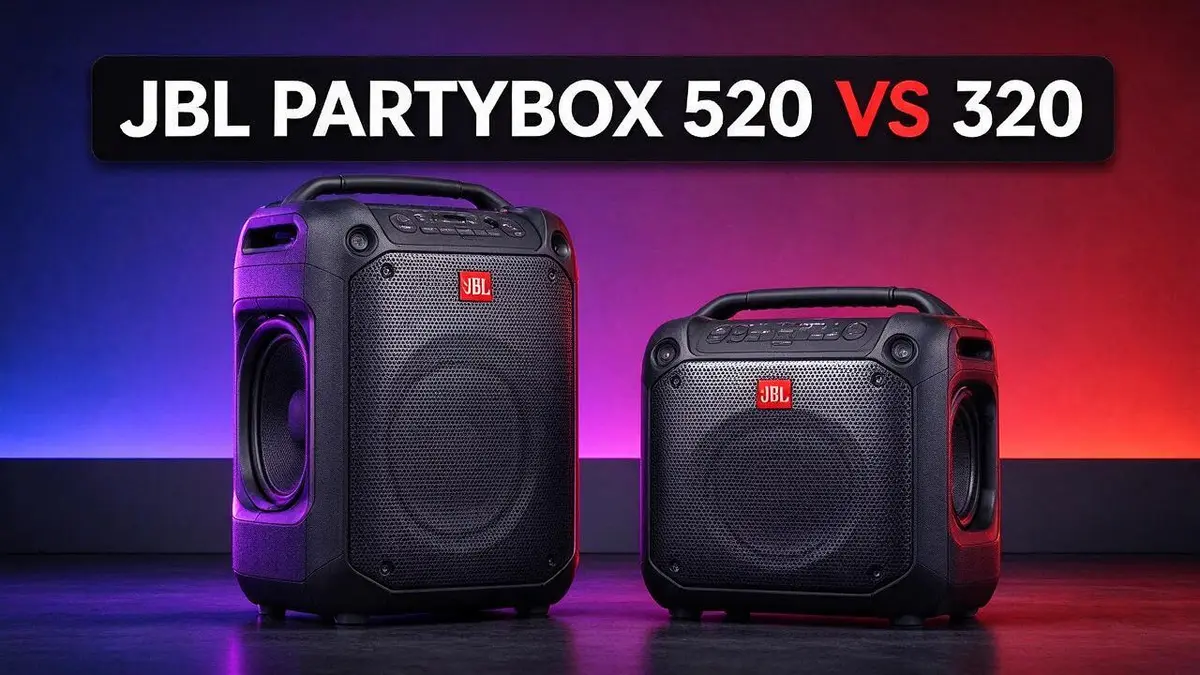
JBL PartyBox 520 vs JBL PartyBox Stage 320: Which Party Speaker Wins?
Looking for a party speaker that can handle a big crowd? The JBL PartyBox 520 and the JBL PartyBox Stage 320 are two top picks from JBL.
Both deliver deep bass and colorful lights that make any gathering feel alive.
The 520 packs 400W RMS power and dual 7.5 inch woofers that fill large rooms with ease. The Stage 320 offers 240W stereo power in a lighter, more portable build that is easy to carry around the house.
Battery life, size, and water resistance often decide the winner for many buyers. Some people want maximum volume for outdoor events, while others need an easy carry for indoor parties.
This guide compares sound, battery, portability, and light shows side by side. By the end of this guide, you will clearly know which speaker fits your space and your crowd.
Quick Comparison: JBL Partybox 520 vs JBL 320
| Feature | JBL Partybox 520 | JBL 320 |
|---|---|---|
| Power output | 400W RMS | 240W stereo |
| Battery life | Up to 15 hours | Hours (exact figure not listed) |
| Battery type | Replaceable battery | Swappable battery packs |
| Drivers | Dual 7.5-inch woofers | Deep, clear bass |
| Water resistance | Splash resistant (rating not specified) | IPX4 rated |
| Size and weight | Bulkier and heavier | Lighter and more portable |
| Best use | Large rooms, outdoor parties | Indoor or moderate outdoor settings |
JBL Partybox 520 Review

- Items Included:1 x JBL PartyBox 520 Portable Bluetooth Speaker with Lights, 1 x Auxiliary Cable, 1 x MicroFiber...
- Maximum Party Power – Delivers a massive 400 watts RMS output using 2×7.5-inch woofers and 2×1-inch tweeters...
- Long-Lasting Battery + Power Flexibility – Up to 15 hours of playback on a full charge via the swappable JBL...
Last update on 2026-11-19 / Affiliate links / Images from Amazon Product Advertising API
The JBL PartyBox 520 suits hosts who plan big gatherings in large rooms or open-air yards. It acts as the heavier, louder option in this lineup, built for people who value raw party power above all.
Its solid build and built-in handle make moving it around feel manageable for most hosts. Sound shaping gets plenty of attention, with strong EQ and tuning tools that let you tweak the mix for each space and crowd.
The dynamic lightshow keeps the dance floor lively once the sun goes down. Its splash resistant body handles light rain and spills, so backyard parties feel less stressful for the host.
Real users say it is way louder than the Stage 320, which matters most when the crowd gets loud. Just remember the front-facing design, since your listening angle changes what you hear across the room.
Pros
- Gets very loud for large crowds
- Long runtime with a replaceable battery
- Plenty of EQ and sound-shaping tools
- Dynamic lightshow with splash resistance
Cons
- Heavy and bulky for easy transport
- Front-facing design changes sound by angle
- Larger footprint fits big rooms better than small spaces
JBL 320 Review

- Powerful JBL Pro Sound: Two 6.5" woofers that deliver clean, precise, deep bass even at top volume and a pair of...
- Futuristic lightshow: Take all that sound and add a thrilling lightshow featuring starry lights, cool light trails...
- Up to 18 hours of play time: Party from dusk till dawn with up to 18 hours on a single charge. Not enough? Swap out...
Last update on 2026-09-19 / Affiliate links / Images from Amazon Product Advertising API
The JBL PartyBox Stage 320 suits hosts who plan indoor parties or moderate outdoor gatherings. Its sturdy frame and light weight make it easy to carry from room to room.
Its 240W stereo output delivers clear, balanced sound that fills a typical living room with ease. The upgraded light show adds energy to the dance floor without needing extra gear or cables.
The swappable battery packs keep the music going for hours, so you can swap in a fresh pack during a long night. The IPX4 rating handles light splashes, which makes a covered patio a safe place to play.
Indoors, it sounds strong and full, especially in a corner where walls reflect the sound. Outdoors on an exposed spot, though, one user found the volume too low for a crowd.
Pros – Strong stereo output for indoor rooms – Lighter and easier to move – Swappable battery packs for longer sessions – IPX4 rating for light splashes
Cons – No XLR input for pro setups – Volume can fall short in exposed outdoor spots – Battery runtime is not clearly stated
Head to Head: Key Differences
Choosing between these two speakers depends on how you plan to use them. Both work well, but they serve different hosts in different ways.
The 520 can team up with a second speaker. Pairing two units spreads sound across a wider area, which helps when a party spills into multiple zones.
The 320 keeps things simpler. One unit fits neatly on a shelf or a small table, so setup stays quick.
Charging speed is a real advantage for the 520. A 10 minute charge gives about 2 hours of playback, which helps when you run short on time.
The 320 has no exact runtime listed, so you cannot compare the two on paper. Swapping in a spare pack is the simpler plan for long sessions with the 320.
Weather exposure is another difference. The 320 carries an IPX4 rating, which handles splashes from any direction. The 520 is only described as splash resistant, so keep it covered during rain.
Placement changes how each speaker sounds. The 520 uses a front facing design, so you should aim it at the crowd.
Both speakers reward thoughtful placement, so test a few spots before the guests arrive.
Who should pick which? Choose the 520 for large yards, crowded rooms, or a long party with a partner speaker. Choose the 320 for smaller gatherings where you want to move the speaker often.
Neither speaker has a clear winner for home listening, since most head to head reviews focus on parties. Test both if you can, and trust how the sound feels in your own space.
Which One Should You Buy
The JBL PartyBox 520 is the overall winner for most parties. It delivers 400W RMS of power, compared to 240W on the Stage 320.
It is reported to be much louder and offers longer battery life with a replaceable battery. The Stage 320 only makes more sense when portability matters more than peak volume.
Buyers who want the most volume and runtime should pick the 520. Its bulk is the trade-off, so plan for a heavier speaker.
Best for each buyer
- JBL PartyBox 520: Large rooms and outdoor parties where maximum volume and long runtime matter most, and a heavier speaker is fine.
- JBL PartyBox Stage 320: Indoor or moderate-sized outdoor gatherings for people who want a lighter, portable speaker with strong bass and a good light show.
Frequently Asked Questions
Which speaker works better in a small room or apartment?
The JBL PartyBox Stage 320 suits smaller spaces. Its 240W stereo output fills a living room with clear sound.
The 520 is much louder, so it can overwhelm a small space.
Does the 520 offer more ways to adjust the sound?
Yes, the 520 includes plenty of EQ and sound-shaping tools. You can adjust the bass and treble to match different music styles.
This helps when your guests want something different from one song to the next.
How do the light shows compare?
Both speakers include light shows. The 520 has a dynamic light show, while the 320 offers an improved one.
If lights matter most, the 520 gives you the bolder display.
Which speaker is easier to carry from the car to the party?
The JBL PartyBox Stage 320 is the easier choice. It is lighter and more portable.
The 520 is bulkier and heavier, so plan for a second person to help carry it.

Sili is a tech reviewer who cuts through the hype to find AI tools and gadgets that make life easier. She shares honest reviews and simple guides for everyday tech users.


