Sony BRAVIA 2 II vs Samsung DU8000: Picture Quality Comparison
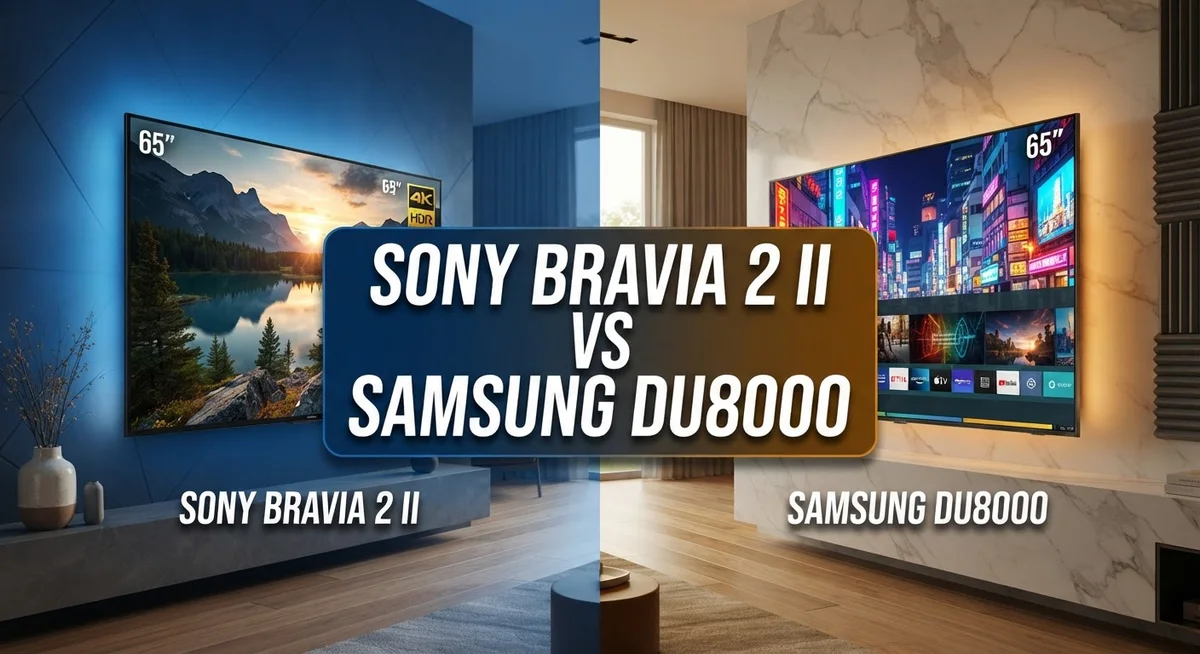
Picking a new TV can feel tricky. Two models often pop up in searches: the Sony Bravia 2 II and the Samsung DU8000.
Both promise great 4K viewing, but they take different paths to get there.
The Sony Bravia 2 II uses a direct-lit backlight and Google TV. It shines with smooth upscaling and wide viewing angles.
This makes it a strong pick for group watching in dim rooms.
The Samsung DU8000 takes a different route with an edge-lit panel and Tizen OS. It offers better contrast and a sleek design.
Dark room viewing feels punchy on this set.
So which one fits your living room? This guide breaks down specs, strengths, and weaknesses side by side.
By the end, you will know exactly which TV matches your viewing habits and space.
Quick Comparison: SONY Bravia 2 Ii vs Samsung DU8000
| Feature | SONY Bravia 2 Ii | Samsung DU8000 |
|---|---|---|
| Screen Size | 65″ | 55″-85″ |
| Backlight Type | Direct-lit | Edge-lit |
| Processor | 4K Processor X1 | Crystal Processor 4K |
| Refresh Rate | 60Hz | 60Hz |
| Smart OS | Google TV | Tizen OS |
| Brightness | Insufficient, slightly better | Poor, weaker overall |
| Contrast/Black Uniformity | Good, but lower than Samsung | Superior contrast |
| Best Use Case | Group viewing, upscaling | Budget, dark rooms |
SONY Bravia 2 Ii Review

- POWERFUL TV PROCESSING: The 4K Processor X1 delivers a lifelike picture that is full of rich colors and sharp...
- ENHANCED COLOR AND FINE DETAILS: See natural and precise picture quality with a wide array of colors and dynamic...
- EVERYTHING YOU STREAM. ALL IN ONE SCREEN: Get access to all your favorite streaming apps in one place with Google...

Last update on 2026-09-14 / Affiliate links / Images from Amazon Product Advertising API
The Sony BRAVIA 2 II is a 65-inch 4K LED television built for viewers who watch with others or in dimly-lit spaces. Its direct-lit backlight system delivers consistent picture quality across the entire screen, making it ideal for group viewing from multiple angles.
The TV packs Sony’s 4K Processor X1, which excels at upscaling lower-quality content to near-4K sharpness. This means older movies, streaming shows, and standard-definition material all look noticeably sharper than on lesser TVs.
The processor also smooths out rough edges in low-quality sources.
Google TV powers the smart features, offering fast app navigation and a responsive interface for streaming. Wi-Fi 6 and Bluetooth 5.3 keep connections stable and lag-free.
The main trade-off is brightness—this TV doesn’t shine in bright rooms or with HDR content under sunny conditions. It performs best when ambient light stays low, which limits its flexibility in homes with large windows or bright daytime viewing habits.
Pros – Excellent upscaling makes older content look sharp and clean – Wide viewing angles keep picture quality strong from the sides – Google TV responds quickly to inputs and app launches – Direct-lit backlight ensures even brightness across the screen
Cons – Insufficient brightness for bright rooms or strong HDR performance – Picture dims noticeably when sunlight enters the room – Not ideal for daytime or high-light environments
Samsung DU8000 Review

- POWERS 3D COLOR MAPPING AND UPSCALING FOR A CLEAR PICTURE: Experience every shade of color as it was meant to be...
- ELEGANT DESIGN THAT ENRICHES YOUR SPACE: Enhance your home décor with a TV crafted from a single metal sheet and...
- SECURES PERSONAL DATA* WITH TRIPLE-LAYER PROTECTION: Your TV experiences are secured. Samsung Knox Security defends...
Last update on 2026-09-14 / Affiliate links / Images from Amazon Product Advertising API
The Samsung DU8000 is a 4K LED television available in sizes from 55 inches up to 85 inches. This TV suits viewers who want a straightforward viewing experience in darker spaces without breaking the bank.
The DU8000 features Samsung’s Crystal Processor 4K, which handles standard streaming content smoothly. The edge-lit backlight design keeps the panel slim and elegant, while Tizen OS provides access to popular streaming apps right out of the box.
Black levels and contrast stand out as genuine strengths on this model. The panel delivers deeper blacks compared to similar Sony competitors, making dark movie scenes feel more immersive in low-light rooms.
Real-world performance shows this TV works best when ambient light stays low. Brightness remains limited in both SDR and HDR modes, so bright living rooms may feel underwhelming.
The 60Hz refresh rate handles standard content fine but won’t satisfy sports or gaming enthusiasts seeking smoother motion.
Pros – Superior contrast and black uniformity compared to equivalent Sony models – Sleek, modern design with edge-lit panel keeps bezels minimal – Tizen OS setup is quick and intuitive for first-time users – Available in multiple screen sizes from 55″ to 85″
Cons – Brightness falls short in both SDR and HDR content, especially in lit rooms – Tizen smart platform responds slower than Google TV alternatives – Limited to 60Hz refresh rate—no high-motion smoothing for sports or gaming
Head to Head: Key Differences
The Sony BRAVIA 2 II and Samsung DU8000 differ significantly in how they handle light and contrast. Sony delivers better brightness performance, though both struggle in bright rooms with HDR content.
Samsung edges ahead on black levels and contrast uniformity, making dark scenes feel more defined.
Backlight technology creates a core difference between these two TVs. The Sony uses direct-lit backlighting, which spreads light more evenly across the screen.
Samsung’s edge-lit design costs less to produce but can show uneven lighting in dark corners.
Picture processing takes different approaches. Sony’s 4K Processor X1 excels at upscaling older, lower-resolution content to look sharper and cleaner.
Samsung’s Crystal Processor 4K handles standard streaming smoothly but doesn’t match Sony’s upscaling strength.
Smart TV platforms separate the user experience significantly. Google TV on the Sony responds faster and feels snappier when jumping between apps.
Tizen OS on Samsung works reliably but moves slower through menus and app launches.
Size flexibility matters for some buyers. Sony BRAVIA 2 II comes at 65 inches only.
Samsung DU8000 offers a wider range from 55 inches up to 85 inches, giving more room options.
Viewing angles favor the Sony considerably. The BRAVIA 2 II maintains picture quality when watching from the side.
Samsung’s panel shows more color shift and dimming when viewed at angles.
Real world use cases differ clearly. Choose Sony for group viewing, content upscaling, and dimly lit spaces.
Pick Samsung if you prioritize deep blacks, watch mostly in dark rooms, and want simpler setup without worrying about processing power.
Which One Should You Buy
The Sony BRAVIA 2 II wins overall. It offers superior picture quality with excellent upscaling and wide viewing angles. Its Google TV platform feels more responsive too.
Both TVs share brightness limits. But Sony’s smart processing and screen performance give it a clear edge in daily use.
The Samsung DU8000 still holds its own. It focuses on deep contrast and simple setup for specific viewing needs.
Best for each buyer
- Sony BRAVIA 2 II: Best for group viewing, content upscaling, and buyers who want a responsive smart platform with strong picture processing.
- Samsung DU8000: Best for dark room viewing and buyers who prioritize contrast and black uniformity in a simple, easy-to-set-up package.
Frequently Asked Questions
Which TV handles upscaling better?
The Sony BRAVIA 2 II wins here. Its 4K Processor X1 excels at making lower-quality content look sharp and clean.
The Samsung DU8000’s Crystal Processor 4K works fine for standard streaming but doesn’t match Sony’s strength in this area.
If you watch a lot of older movies or cable TV, the Sony delivers noticeably better results.
Should I choose based on room lighting?
Both TVs struggle in bright rooms. Neither gets bright enough for sunny spaces.
However, the Sony performs slightly better overall.
For dark or dimly-lit rooms, the Samsung DU8000 actually shines. Its superior black levels and contrast make dark scenes feel more defined.
The Sony works fine in low light too, but Samsung’s edge-lit design handles darkness better.
What’s the difference in smart TV experience?
Google TV on the Sony BRAVIA 2 II responds faster. Menus load quicker, and apps launch without lag.
Tizen OS on the Samsung works reliably but moves slower through the interface.
If you value smooth navigation and quick access to apps, Sony wins. The Samsung still functions well for basic streaming and casual use.
Which TV is better for gaming or sports?
Both TVs max out at 60Hz, so neither excels here. They handle standard content smoothly, but gamers and sports fans seeking ultra-smooth motion should look elsewhere.
The Sony’s faster processor gives it a slight edge for responsiveness, but don’t expect gaming performance from either model.
Which TV should I choose overall?
Pick the Sony BRAVIA 2 II for superior picture quality, upscaling power, and a responsive smart platform. Choose the Samsung DU8000 if contrast and black uniformity matter most in your viewing space.

Sili is a tech reviewer who cuts through the hype to find AI tools and gadgets that make life easier. She shares honest reviews and simple guides for everyday tech users.