Redodo vs SOK Battery: Complete LiFePO4 Comparison Guide
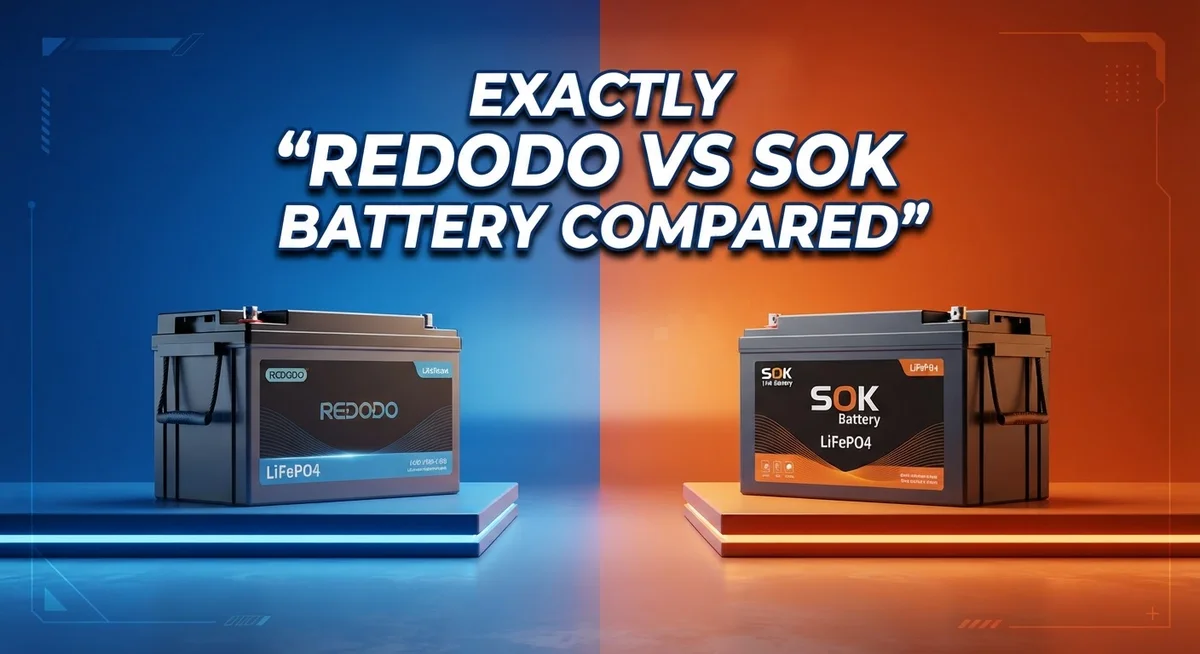
Choosing a good LiFePO4 battery matters for your RV, boat, or off-grid setup. Two brands often come up in this search: Redodo and SOK Battery.
Both offer 12V lithium batteries with solid features. But they differ in key ways that can affect your setup.
Redodo gives you a wide range of capacities and compact sizing. This makes it a smart pick for space-limited builds.
SOK Battery focuses on long life and tough performance. It handles harsh conditions and heavy power draws with ease.
This guide breaks down specs, strengths, and weaknesses for each brand. We will compare capacity, durability, discharge rates, and more.
By the end, you will know which battery fits your needs. Let’s dive into the details and find your best match.
Quick Comparison: Redodo vs Sok Battery
| Feature | Redodo | Sok Battery |
|---|---|---|
| Chemistry Type | 12V LiFePO4 | 12V LiFePO4 |
| Capacity Range | 20Ah–320Ah | 100Ah–314Ah |
| Discharge Rate | Standard capability | 100A continuous, 800A peak |
| Cycle Life | Not specified | 3,000–4,000 cycles |
| Warranty Period | 1 year reported | 10 years |
| Cold Weather Performance | Poor performance | Self-heating protection |
| Durability Rating | Mixed reliability feedback | Marine-grade IP67 waterproof |
| Monitoring Features | Bluetooth on select models | Bluetooth included |
Redodo

- 【 Dual-purpose Marine Battery】 Redodo dual-purpose lithium battery delivers powerful 900 CCA & 1000 MCA instant...
- 【Smart Bluetooth】The 12v marine battery is connected to Bluetooth 5.0 module, allowing for real-time monitor...
- 【Group 27 Size】Universal size Group27, (12.13 "L x 6.69" W x 8.31 "H), 23.1 pounds ultra-light design for...
Last update on 2026-09-19 / Affiliate links / Images from Amazon Product Advertising API
Redodo makes 12V LiFePO4 batteries that serve RV owners, van builders, and off-grid users who need flexible capacity options. The brand offers a wide range from 20Ah to 320Ah, so you can pick the exact size your setup requires without overpaying for extra power you won’t use.
The standout feature is compact Group 24 and Group 31 form factors that fit tight spaces in RVs and vans. Select models include Bluetooth monitoring, letting you check battery status from your phone in real time.
Build quality is solid for mid-range applications, though entry-level models come with basic battery management systems. Real-world performance shows the 320Ah model delivers 4+ kWh of usable energy, supporting several days off-grid in good conditions.
Cold-weather performance lags behind premium competitors, and warranty coverage sits at one year on most units. Mixed reliability feedback suggests these batteries work well in moderate climates but may struggle in extreme temperatures.
Pros
- Huge capacity range (20Ah–320Ah) lets you match your exact power needs
- Compact Group 31 sizing fits RVs and vans with limited battery space
- Bluetooth monitoring on select models for remote status checks
- 4+ kWh usable energy on high-capacity models supports multi-day off-grid use
Cons
- Limited battery management systems on entry-level models reduce protection
- Poor cold-weather performance restricts use in freezing climates
- One-year warranty and mixed reliability reports raise durability concerns
Sok Battery

- 【Smart Self-Heating (-4°F/-20℃)】: Say goodbye to dead batteries in winter. Our intelligent system...
- 【6mm Metal Case & 8000-12000 Cycles】: Built for the toughest environments. This SOK 12V 206AH LiFePO4 battery...
- 【Comprehensive BMS Protection】: The built-in Battery Management System (BMS) monitors and protects against...
Last update on 2026-09-19 / Affiliate links / Images from Amazon Product Advertising API
Sok Battery
Sok Battery makes 12V LiFePO4 batteries built for marine, off-grid solar, and heavy-duty applications where durability matters most. This brand prioritizes long life and extreme performance over everything else.
The standout features include 3,000–4,000 cycle life, a 10-year lifespan, and high discharge rates (100A continuous, 800A peak). IP67 waterproof protection and self-heating technology let you use these batteries in harsh environments—boats, remote cabins, and demanding solar systems all benefit.
Build quality is marine-grade and serviceable, meaning you can access internal components if needed. Cold-weather charging protection keeps the battery safe in freezing conditions, and the design handles extreme temperatures better than most competitors.
Real-world performance shows reliable power delivery under stress and consistent capacity retention over thousands of cycles. Users report excellent reliability in salt-air and wet environments where other batteries fail quickly.
Pros
- Superior cycle life (3,000–4,000 cycles) and 10-year lifespan for long-term value
- High discharge rates (100A continuous, 800A peak) handle demanding loads
- IP67 waterproof and self-heating for marine and cold-climate use
- Serviceable design lets you maintain or repair internal components
Cons
- Higher price point than entry-level competitors
- Some Bluetooth and heater model reliability issues reported
- Customer service response times vary by region
Head to Head: Key Differences
Redodo and SOK Battery take different paths to serve lithium power needs. Redodo prioritizes flexibility through a massive capacity range, while SOK focuses on extreme durability and discharge performance.
Capacity options separate these two clearly. Redodo offers 20Ah through 320Ah models, letting you pick the exact size your setup requires.
SOK ranges from 100Ah to 314Ah, which means fewer granular choices but still solid coverage for most applications.
Form factor matters for tight spaces. Redodo’s Group 24 and Group 31 designs squeeze into RVs and vans where space is limited.
SOK batteries are larger and heavier, designed for permanent installations where footprint matters less.
Discharge capability shows where SOK pulls ahead for demanding work. SOK delivers 100A continuous discharge with 800A peak bursts, handling heavy inverter loads and starting motors without flinching.
Redodo handles standard loads well but doesn’t match these extreme specs.
Environmental toughness favors SOK in harsh settings. The IP67 waterproof rating and self heating system mean SOK works in rain, salt spray, and cold climates where Redodo struggles.
Redodo’s cold weather performance is noticeably weaker.
Lifespan expectations differ significantly. SOK promises 3,000 to 4,000 cycles with a 10 year warranty, supporting long term off grid and marine use.
Redodo typically offers one year coverage with mixed reliability feedback, suggesting shorter real world life.
Best fit scenarios clarify the choice. Pick Redodo if you need flexible capacity in a compact RV or van setup.
Choose SOK if you demand marine grade durability, high discharge rates, or extended off grid independence.
Which One Should You Buy
Final Verdict
SOK Battery comes out on top in this comparison. It offers better cycle life, cold weather protection, and high discharge rates.
Its marine grade build also means it holds up well in tough conditions. This makes it a smart long term choice for demanding setups.
Redodo still shines for specific needs. It gives buyers more size and capacity options to fit tight spaces.
Best for each buyer
-
Redodo: Best for RV and van builds that need a wide range of capacity options and compact sizing for tight spaces.
-
SOK Battery: Best for marine, off-grid solar, and harsh environment setups that need extreme durability, high discharge power, and long-term reliability.
Frequently Asked Questions
Which battery handles cold weather better?
SOK Battery wins here. It includes self-heating technology that protects charging in freezing conditions.
Redodo batteries struggle in cold weather and may not charge safely below certain temperatures. If you live in a harsh climate or use your battery in winter, SOK’s cold-weather protection is a real advantage.
Redodo works fine in mild climates. Just avoid charging it when temperatures drop significantly.
Can I monitor either battery from my phone?
Both offer Bluetooth monitoring on select models. You can check voltage, current, and health status from your phone with either brand.
SOK includes Bluetooth on most units as standard. Redodo reserves it for higher-end models.
If remote monitoring matters to you, check which Redodo capacity you’re buying to confirm it has the feature.
Which one lasts longer?
SOK Battery delivers superior longevity. It offers 3,000 to 4,000 cycle life and a 10-year lifespan.
That means it keeps performing well through thousands of charge cycles.
Redodo provides decent lifespan but typically shows shorter warranty periods (around 1 year reported). Real-world feedback suggests SOK holds capacity better over time.
What if I need a specific capacity between 100Ah and 320Ah?
Redodo shines here. Its wide capacity range from 20Ah to 320Ah means you can find your exact power match.
SOK offers 100Ah to 314Ah, which covers most needs but with fewer granular options.
For RV builds where you want precise energy storage, Redodo’s flexibility helps you avoid buying more or less than you need.
Which battery handles extreme discharge demands?
SOK dominates. It delivers 100A continuous discharge and 800A peak output.
That handles serious loads like large inverters or multiple devices running simultaneously.
Redodo manages standard loads well but doesn’t match these extreme specs. For marine engines, heavy power tools, or demanding solar systems, SOK’s discharge capability makes the difference.

Sili is a tech reviewer who cuts through the hype to find AI tools and gadgets that make life easier. She shares honest reviews and simple guides for everyday tech users.