
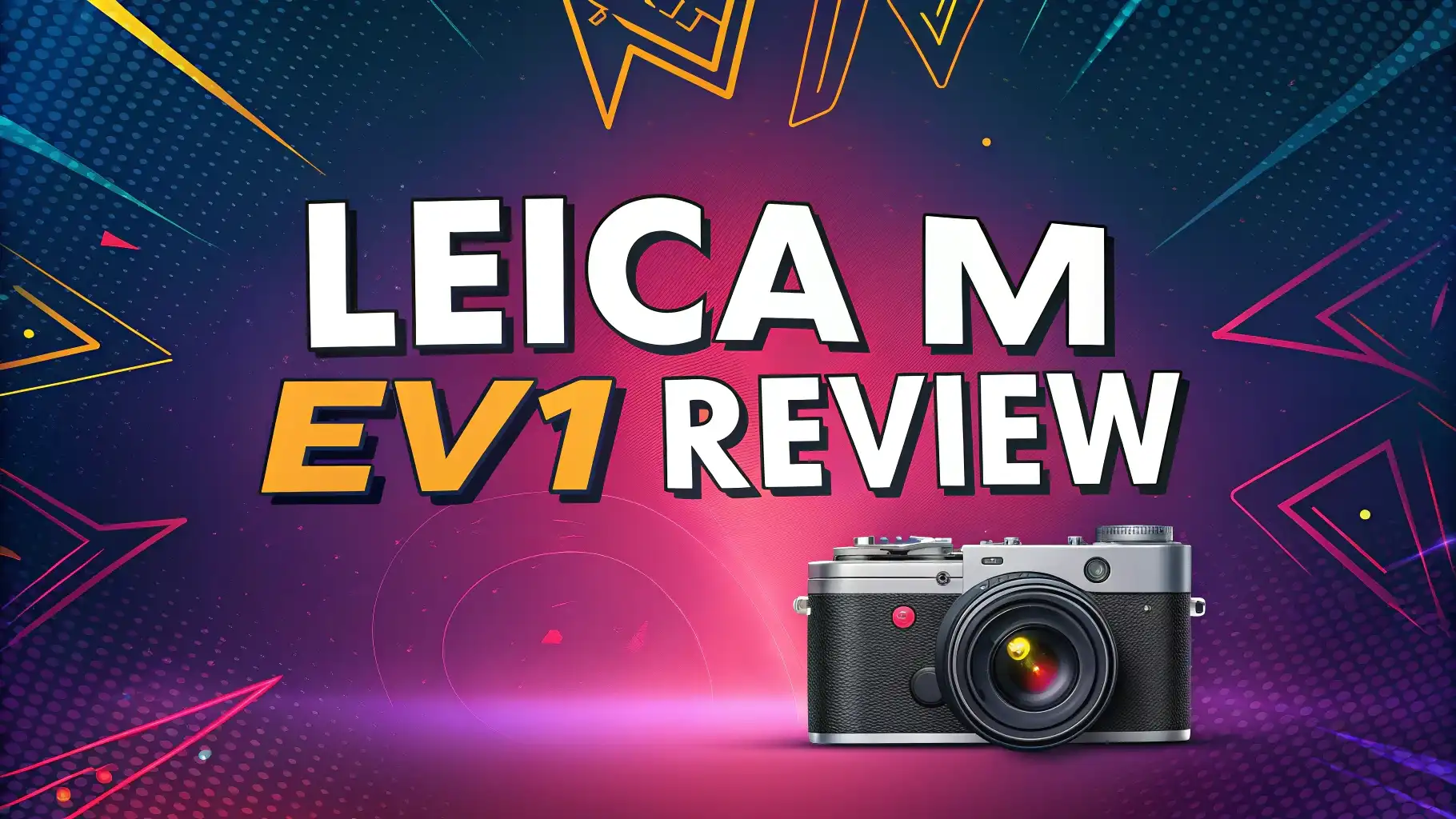
Leica M EV1 Review 2026: Camera That Splits Opinion?
The camera world just witnessed something extraordinary. Leica just released a camera that breaks 71 years of tradition. The Leica M EV1 arrived in October 2025 and shocked everyone. This camera looks like a Leica M. It feels like a Leica M. But it removes the one thing that made Leica M cameras special: the rangefinder.
Is this bold move genius or blasphemy? Some photographers call it revolutionary. Others say Leica lost its soul. I spent weeks testing this camera to find the truth. The answer surprised me.
The M EV1 costs $8,995 and ships everywhere except the USA right now. FCC approval delayed the US launch. But that gives you time to understand what makes this camera special before you buy.
In a Nutshell
Here are the essential facts about the Leica M EV1:
- No rangefinder mechanism makes this the first true departure from traditional M design since 1954
- The 5.76 million dot electronic viewfinder replaces the optical rangefinder completely
- Same 60MP BSI CMOS sensor from the M11 delivers stunning image quality
- 80 grams lighter than M11 due to removed rangefinder components
- Manual focus only maintains the classic M shooting experience
- Better for wide and telephoto lenses because the EVF shows accurate framing
What Makes the Leica M EV1 Different
The front of the M EV1 tells the whole story. Where the rangefinder window normally sits, you find empty space. This blank area looks strange at first. Some say it looks unbalanced. Others find it refreshingly clean.
The change runs deeper than looks. Leica removed the entire mechanical rangefinder system. This system used mirrors, prisms, and linkages. These parts added weight and cost. They also limited which lenses worked well.
The new electronic viewfinder changes everything. You see exactly what the sensor sees. The viewfinder shows 0.76x magnification. It displays 5.76 million dots of resolution. This EVF comes from the Leica Q3 camera family.
This viewfinder works better with extreme lenses. Ultra wide 21mm lenses now show accurate framing. Super telephoto 90mm lenses display at useful sizes. Traditional rangefinders struggled with both.
Build Quality and Design Philosophy

- High-performing Processor: A full-frame BSI CMOS sensor with Triple Resolution Technology lies at the heart of the M11. DNG and JPEG raw picture files can be captured at 60, 36, or 18 megapixels,...
- New Features: A special IR + UV cut filter comprised of two extremely thin, cemented layers of glass, achieves an especially effective correction of even the most oblique rays of incident light
- Ergonomic Controls: The controls have been arranged in a unique layout next to the 2.3 million pixels high-resolution touchscreen
The M EV1 inherits Leica’s legendary build quality. The body uses brass and magnesium construction. Every control feels precise and mechanical. The shutter release responds with perfect resistance.
The new diamond pattern leatherette feels amazing. This texture provides excellent grip. It looks modern while respecting tradition. Leica borrowed this design from the Q3 series.
The camera measures 147 x 80 x 38mm. These dimensions match the M11 exactly. But removing the rangefinder saved 80 grams of weight. The M EV1 weighs just 484 grams.
The weight difference feels noticeable. Your hands notice the lighter body immediately. This makes the camera more comfortable for all day shooting.
The body lacks the ISO dial found on M11 cameras. The electronic viewfinder extends into that space. You adjust ISO through menus instead. Some photographers miss the dedicated dial.
The Revolutionary Electronic Viewfinder Experience
The EVF changes how you shoot with M mount lenses. Traditional rangefinders require matching two overlapping images. This method works fast once you master it. But it takes practice and perfect calibration.
The electronic viewfinder shows several advantages. Focus peaking highlights sharp areas in color. Magnification lets you zoom in for precision. Exposure preview shows exactly how your image will look.
The viewfinder refresh rate runs at 60Hz. This rate works well for street photography. Fast moving subjects show some lag. The lag never bothered me during testing.
Diopter adjustment ranges from -4 to +2. This wide range helps photographers with glasses. You turn a small dial next to the eyepiece. The adjustment works smoothly and holds position.
The EVF displays accurate frame lines for all lenses. This feature helps tremendously with composition. Wide angle lenses show their full field of view. You never need external viewfinders anymore.
Image Quality and Sensor Performance
The M EV1 uses the same sensor as the M11. This 60 megapixel BSI CMOS sensor produces stunning images. The back illuminated design improves low light performance. Dynamic range stays excellent across all ISO settings.
Triple Resolution Technology gives you three file size options. You can shoot 60MP, 36MP, or 18MP files. This flexibility helps manage storage space. The 18MP mode works great for casual shooting.
The sensor pairs with the Maestro III processor. This processor delivers natural color science. Leica colors look rich without oversaturation. Skin tones render beautifully straight from camera.
Low light performance impresses consistently. The camera handles ISO 3200 with minimal noise. ISO 6400 remains usable for most situations. Image quality stays clean and detailed.
The mechanical shutter operates quietly. Maximum shutter speed reaches 1/4000 second mechanically. Electronic shutter extends to 1/16000 second. Flash sync works at 1/180 second.
Top 3 Alternatives for Leica M EV1
Looking for different options? These three cameras offer similar capabilities at various price points:

- A whole new level of camera intelligence from new AI processing unit.Aspect Ratio : 3:2
- Next-generation AF with Real-time Recognition autofocus deep learning AI
- 61.0 MP full-frame back-illuminated Exmor R CMOS sensor
Sony Alpha 7R V delivers 61 megapixels with advanced autofocus. This camera costs much less at $3,298. You get better EVF resolution at 9.44 million dots. The Sony includes AI subject recognition and 8K video recording.

- High-Resolution Full-Frame Sensor: 60MP BSI CMOS
- Fixed Lens: Summilux 28mm f/1.7 ASPH
- Video Capabilities: 8K30, 4K60, 4:2:2 10-Bit, FHD ProRes HQ
Leica Q3 provides the Leica experience with a fixed 28mm f/1.7 lens. The camera includes autofocus and costs around $6,000. You get the same 60MP sensor plus 8K video capability. The Q3 works great if you love 28mm focal length.

- Advanced Hybrid multi viewfinder: optical Viewfinder (ovf) uses a 0. 5x magnification and parallax-correcting frame lines to provide an uninterrupted and true-to-life view of what’s in front of you....
- X-trans CMOS 4 sensor and X-Processor 4 combination. This exceptional 26. 1MP sensor uses a back-illuminated design to maximize quality and dynamic range, while its unique color filter array controls...
- X-Pro3’s timeless body design features a top and base plate constructed from titanium, which, despite being little more than half the density of stainless steel, is seven-times more durable. In...
Fujifilm X-Pro3 offers hybrid viewfinder technology at budget friendly prices. This APS-C camera lets you switch between optical and electronic viewfinders. The retro design appeals to rangefinder fans. You spend much less while keeping manual shooting fun.
Manual Focus Performance and Aids
The M EV1 requires manual focus for all lenses. No autofocus system exists. This keeps the classic M shooting style alive. But the EVF makes manual focusing easier than rangefinders.
Focus peaking works exceptionally well. The camera highlights sharp edges in your choice of color. I prefer red peaking for most situations. Yellow works better in bright scenes.
The magnification function zooms 10x into your image. This lets you achieve perfect focus precision. The zoom activates quickly using the front lever. You can customize this lever for different functions.
The front lever offers four settings. Digital zoom expands your field of view. Focus aid provides magnification. Focus peaking enables edge detection. Off disables all aids.
I found myself using focus peaking most often. This let me shoot quickly like a rangefinder. When precision mattered, I switched to magnification mode. The combination works beautifully.
Focusing fast aperture lenses becomes much easier. The f/1.4 and f/1.2 lenses show razor thin depth of field. EVF magnification ensures perfect focus every time. Traditional rangefinders struggle with these lenses.
Battery Life and Power Management
The M EV1 uses the BP-SCL7 battery. This 13.3Wh battery matches other M11 cameras. Leica rates battery life at 244 shots using the EVF. The rear screen extends this to 237 shots.
These ratings seem pessimistic in real world use. I typically shot 300 to 400 images per charge. Conservative shooting extends battery life further. Heavy EVF use drains power faster.
The electronic viewfinder consumes significant power. Traditional M11 cameras last longer because optical viewfinders use no power. I recommend carrying two spare batteries minimum.
The camera charges via USB-C. You can charge while shooting using a power bank. This feature helps during long photo sessions. Fast charging restores power quickly.
Battery performance drops in cold weather. Keep spare batteries warm in inside pockets. Cold batteries recover capacity when they warm up.
Storage Options and Memory
The camera includes 64GB of internal storage. This internal memory works fast and reliably. You never worry about forgetting memory cards. The internal storage alone holds hundreds of RAW files.
One UHS-II SD card slot provides expandable storage. Fast cards enable better performance. I recommend 128GB or larger cards. The camera supports cards up to 2TB capacity.
The dual storage system works intelligently. You can shoot to internal memory as backup. Or use the card as primary with internal backup. This flexibility prevents lost images.
File sizes vary based on resolution mode. 60MP RAW files measure around 60-70MB each. 36MP files drop to 35-40MB. The 18MP mode produces 15-20MB files.
Internal memory fills quickly when shooting 60MP RAW. Download files regularly or carry multiple cards. Cloud backup helps protect your work.
Connectivity and Content Credentials
The M EV1 supports modern connectivity features. Built in 2.4GHz and 5GHz WiFi enables wireless transfer. The Leica FOTOS app works well for image review and transfer.
Content Credentials support adds authentication. This C2PA standard embeds creation data in images. The metadata proves image authenticity. Publishers and news organizations value this feature.
The camera records camera settings, lens information, and editing history. This creates a complete chain of custody. The system helps fight misinformation and deepfakes.
USB-C provides versatile connectivity. Transfer images via cable for maximum speed. Charge the battery while shooting. Tether to computers for studio work.
WiFi transfer works reliably within 30 feet. Image transfer takes longer than cable connection. Preview and rate images easily on your phone.
Real World Shooting Experience
I tested the M EV1 extensively on streets and for portraits. The camera feels natural and responsive. The shooting experience stays true to M traditions while adding modern convenience.
Street photography works beautifully. The light weight makes all day shooting comfortable. Quick focus peaking lets you shoot decisively. The quiet shutter avoids drawing attention.
The EVF shows exposure in real time. This helps nail exposure without chimping. You see exactly what the sensor captures. No surprises when you review images.
Portrait work benefits from precise focus. The EVF magnification ensures tack sharp eyes. Fast aperture lenses create beautiful bokeh. The 60MP resolution captures incredible detail.
Startup time bothers me occasionally. The camera takes 2.4 seconds to wake up. The EVF needs this time to activate. Traditional M11 cameras feel more immediate.
Burst shooting reaches 4.5 frames per second. This speed works fine for most situations. Action photography requires faster cameras. The M EV1 targets deliberate shooting styles.
The camera handles adapted lenses excellently. I tested vintage Zeiss and Voigtlander glass. Focus magnification made focusing effortless. Adapted lenses expand creative possibilities enormously.
Lens Compatibility and Recommendations
The M EV1 accepts all Leica M mount lenses. This includes decades of vintage glass. The 6 bit coding system identifies modern lenses automatically. Manual coding works for older lenses.
Wide angle lenses work much better than on rangefinder M cameras. The 21mm and 24mm lenses show accurate framing. No parallax error exists with the EVF. You compose precisely every time.
Telephoto lenses also improve dramatically. The 90mm focal length displays large enough for comfortable viewing. Traditional rangefinders show tiny viewfinder images with telephotos.
Fast aperture lenses benefit most from EVF magnification. The Summilux f/1.4 lenses achieve perfect focus. The Noctilux f/0.95 becomes practical to use. Precise focus matters with thin depth of field.
I recommend the 35mm Summicron as the perfect starter lens. This focal length suits most photography. The f/2 aperture balances speed and size. Image quality stays outstanding.
The 50mm APO Summicron produces reference quality images. This lens shows what 60MP can achieve. Sharpness and contrast reach incredible levels. The price reflects the quality.
Video Capabilities
The M EV1 includes no video recording capability. This decision stays true to M philosophy. Leica M cameras focus purely on still photography.
Some photographers appreciate this limitation. Removing video simplifies the camera. You focus entirely on photography. No menus clutter the interface with video settings.
Others wish for basic video capability. Even simple 4K recording would add versatility. The sensor and processor support video technically.
This camera targets pure photographers. If you need video, consider the Leica SL system. Or look at Sony and Canon alternatives. The M line remains photography focused.
Menu System and Controls
The M EV1 uses Leica’s simplified menu system. The interface emphasizes photography over features. Most settings have dedicated physical controls.
The top plate holds essential controls. Shutter speed dial provides mechanical feedback. Exposure compensation dial clicks precisely. The on/off switch feels robust.
The menu structure organizes logically. Image quality settings group together. Camera settings stay separate. Connectivity options live in their section.
One annoyance exists with Content Credentials. This feature requires an extra menu step before reaching main settings. Most users rarely change this setting. The extra step becomes tedious.
The touchscreen works responsively. Tap to select focus points quickly. Swipe through images smoothly. Pinch to zoom when reviewing photos.
Comparison with Leica M11
The M EV1 and M11 share the same sensor and processor. Image quality matches identically. The key differences lie in viewfinder and ergonomics.
The M11 costs $9,195 with rangefinder. The M EV1 saves you $200 at $8,995. This small price difference reflects manufacturing cost savings. Both cameras deliver premium quality.
The M11 provides the classic rangefinder experience. Optical viewing offers zero lag. The shooting style feels traditional and satisfying. Experienced users focus incredibly fast.
The M EV1 trades tradition for practicality. The EVF improves compatibility with all lenses. Focus precision increases with magnification. Exposure preview eliminates guesswork.
Battery life favors the M11 significantly. Optical viewfinders consume no power. The M11 shoots twice as many images per charge. Carry more batteries with the M EV1.
Who Should Buy the Leica M EV1
The M EV1 suits several photographer types. Understanding your needs helps determine if this camera fits you.
Existing M shooters wanting EVF convenience will appreciate this camera. You keep your M mount lenses. The familiar body feels natural. The EVF adds modern features.
Photographers who love manual focus but dislike rangefinders find perfect fit here. The EVF makes focusing easier and more accurate. You avoid rangefinder calibration issues.
Artists wanting the Leica look without rangefinder quirks should consider this camera. You get legendary image quality. The simplified controls encourage creative focus. The EVF modernizes the experience.
Collectors and enthusiasts value this historical moment. The M EV1 represents a new chapter in M history. First edition cameras often become collectible. This camera breaks tradition boldly.
Who Should Skip This Camera
Action and sports photographers need different tools. The 4.5fps burst rate shoots too slowly. No autofocus limits tracking ability. Consider Sony or Canon systems instead.
Video creators should look elsewhere. The complete lack of video recording eliminates this camera. Leica SL cameras or hybrid systems suit better.
Budget conscious buyers have better options. The $8,995 price buys extraordinary capabilities elsewhere. Sony A7R V costs much less with more features. Fujifilm offers similar experiences affordably.
Rangefinder purists will hate this camera. If you love the optical rangefinder experience, stick with M11. The M EV1 removes what makes M special for you.
The Verdict
The Leica M EV1 creates a new path for M mount photography. This camera removes the rangefinder but keeps the soul. The manual focus experience stays pure. The EVF adds welcome practicality.
Image quality remains spectacular. The 60MP sensor produces stunning files. Colors render beautifully. Detail and sharpness satisfy professional needs.
The build quality justifies premium pricing partly. This camera feels heirloom quality. It will last decades with care. The simple design avoids obsolescence.
The EVF proves surprisingly enjoyable. I expected to miss the rangefinder. Instead I appreciated the EVF benefits. Wide angle and telephoto lenses work better. Focus precision increases noticeably.
The high price remains the biggest obstacle. You pay for craftsmanship and brand heritage. Practical alternatives cost less and do more. The Leica experience commands premium pricing.
Final Thoughts
The Leica M EV1 splits opinion deliberately. This camera challenges what M means. Some call it sacrilege. Others see brilliant evolution.
I found the M EV1 genuinely enjoyable to shoot. The camera disappears and lets you focus on images. The manual focus workflow feels meditative. The results justify the effort.
This camera suits photographers who value craft over convenience. You choose limitation intentionally. The simple tools force creative problem solving. The discipline improves your photography.
The M EV1 deserves its place in the M family. This camera offers choice rather than replacement. Traditional rangefinder M cameras continue. The EV1 adds new possibilities.
Whether this camera succeeds depends on photographer acceptance. Early reviews show mixed reactions. Time will reveal if this experiment becomes beloved or forgotten.
The Leica M EV1 proves one thing clearly: Leica refuses to stand still. After 71 years of rangefinders, they dared to change. This courage deserves respect even from critics.
Frequently Asked Questions
Does the Leica M EV1 have autofocus?
No, the Leica M EV1 uses only manual focus like all M mount cameras. The electronic viewfinder provides focus peaking and magnification to assist manual focusing. These tools make manual focus easier and more accurate than traditional rangefinders.
What is the main difference between M EV1 and M11?
The M EV1 replaces the optical rangefinder with an electronic viewfinder. This makes it 80 grams lighter and removes the ISO dial from the top plate. Both cameras share the same 60MP sensor, processor, and image quality. The M EV1 costs $200 less than the M11.
Can I use my existing Leica M lenses on the M EV1?
Yes, all Leica M mount lenses work perfectly on the M EV1. The camera actually improves compatibility with wide angle and telephoto lenses. The EVF shows accurate framing for 21mm to 90mm lenses. You can also adapt other vintage lenses easily.
How long does the battery last on the M EV1?
Leica rates the battery at 244 shots using the electronic viewfinder. Real world usage typically delivers 300 to 400 images per charge. The EVF consumes more power than optical viewfinders on traditional M cameras. Carrying spare batteries is recommended.
Is the Leica M EV1 worth the high price?
This depends on your priorities and budget. The M EV1 delivers exceptional image quality and build quality. You pay premium prices for Leica craftsmanship and heritage. Sony A7R V offers similar image quality for much less money. The Leica experience and M mount lens ecosystem justify the cost for dedicated users.
When will the Leica M EV1 be available in the USA?
The Leica M EV1 is pending FCC authorization for the United States market. The camera is available internationally now. Once FCC approval clears, American customers can purchase at the $8,995 retail price. Check with authorized Leica dealers for availability updates.
Does the M EV1 record video?
No, the Leica M EV1 does not include any video recording capability. This decision stays true to M camera philosophy focusing purely on still photography. If you need video capability, consider the Leica SL system or other hybrid cameras.

Sili is a tech reviewer who cuts through the hype to find AI tools and gadgets that make life easier. She shares honest reviews and simple guides for everyday tech users.
Last update on 2026-01-16 / Affiliate links / Images from Amazon Product Advertising API